In 1987, my cousin Florence Hughes (a daughter of Alexander Graham Leask) gave me an artist’s sketchbook filled with exquisite water-colour and gouache paintings of Hokianga Harbour and sea voyages dating from 1915 to 1917. They record the farm properties and sea voyages of three Leask brothers: Henry (1848 – ca 1934), Charles (1862 – ca 1930) and Alfred (1863 – ca 1939). According to Florence, they were very shy bachelors who retired from their shipping life and went to New Zealand. In fact, only Henry was a master mariner, whereas Charles was an accountant and Alfred was a banker.
In about 1896, Henry bought several parcels of land on the south side of Hokianga Harbour. Charles visited but did not stay long and returned to Britain, and Alfred joined Henry later. They found New Zealand hard work – “every time a crop was ready for sale, the local Maori crept up the mountain and made off with the fattened sheep etc”. In 1907, the brothers bought land at Fawn Bluff in Bute Inlet, a remote part of British Columbia and, with the help of their nephew Alexander, built a house, wharf and motor boat there.
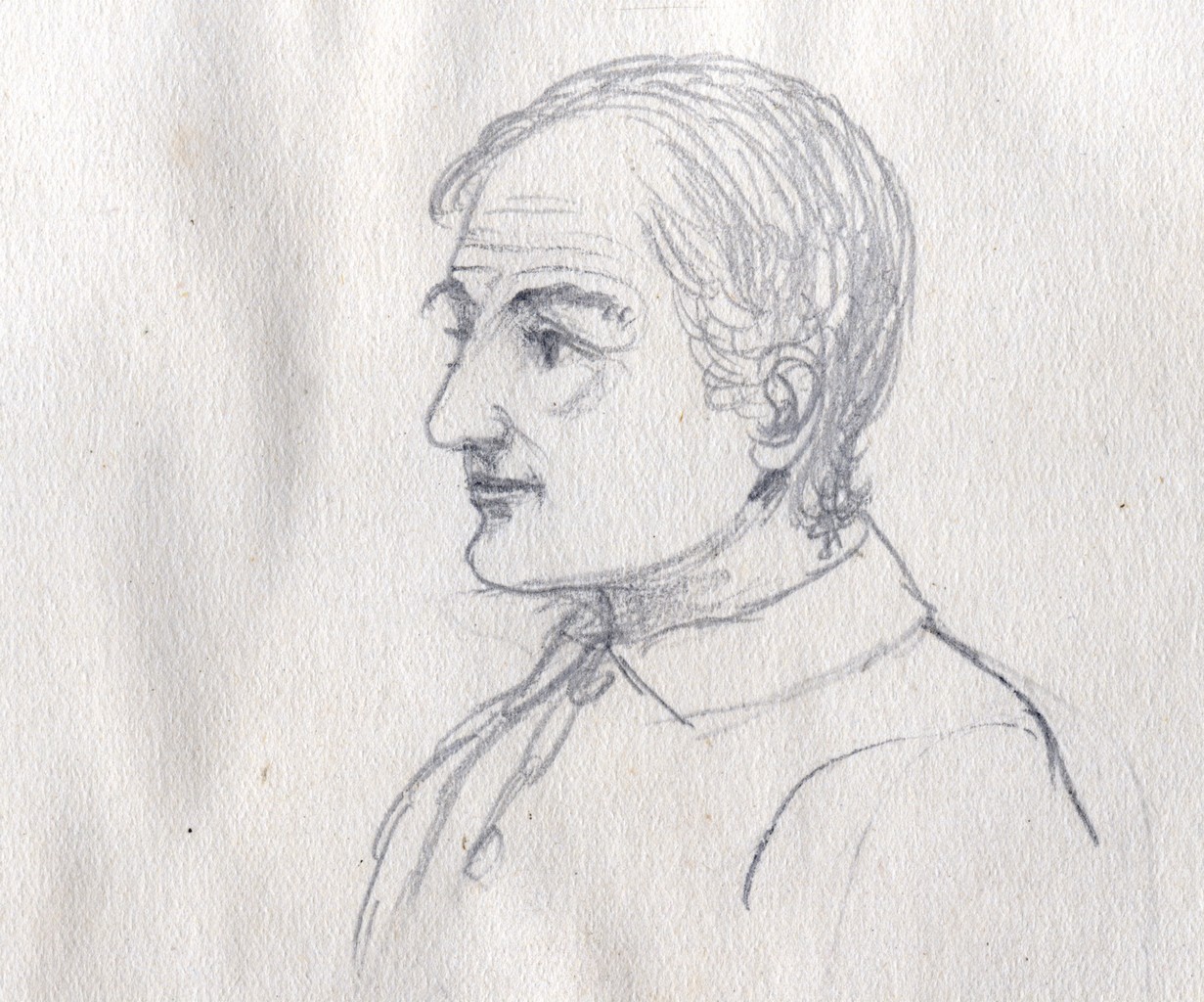
Florence said that the paintings were done by Alfred Leask, but my distant cousin Liz Rannie has paintings of Fawn Bluff in an identical style that she says were painted by Charles. That could be right – the stylised signatures could be an “AL” or a “CL”. Either way, the paintings have been painted directly into a bound book approximately 26 x 18 cm and indicate considerable skill. I presume that the portrait below is the artist’s self-portrait.
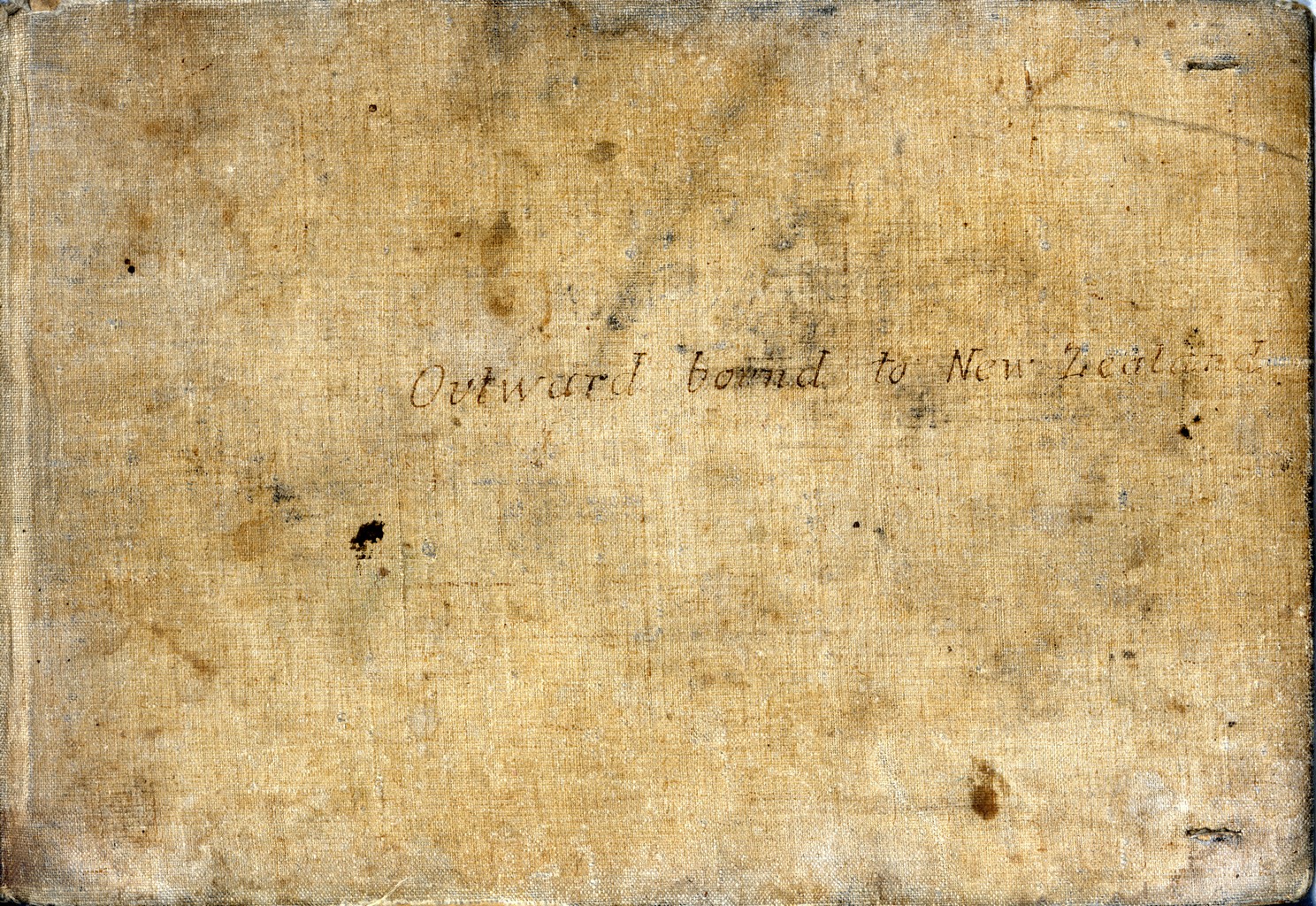
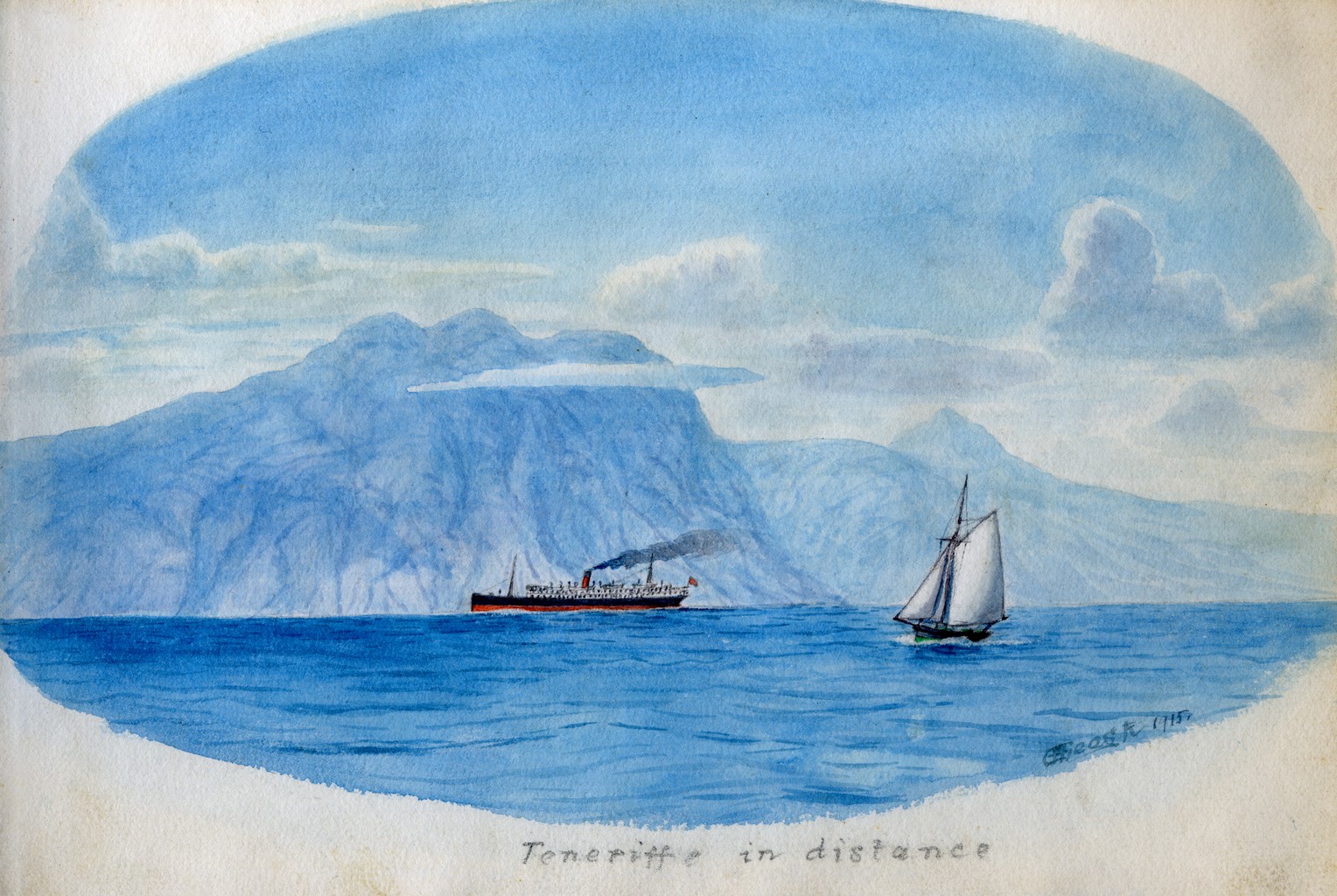
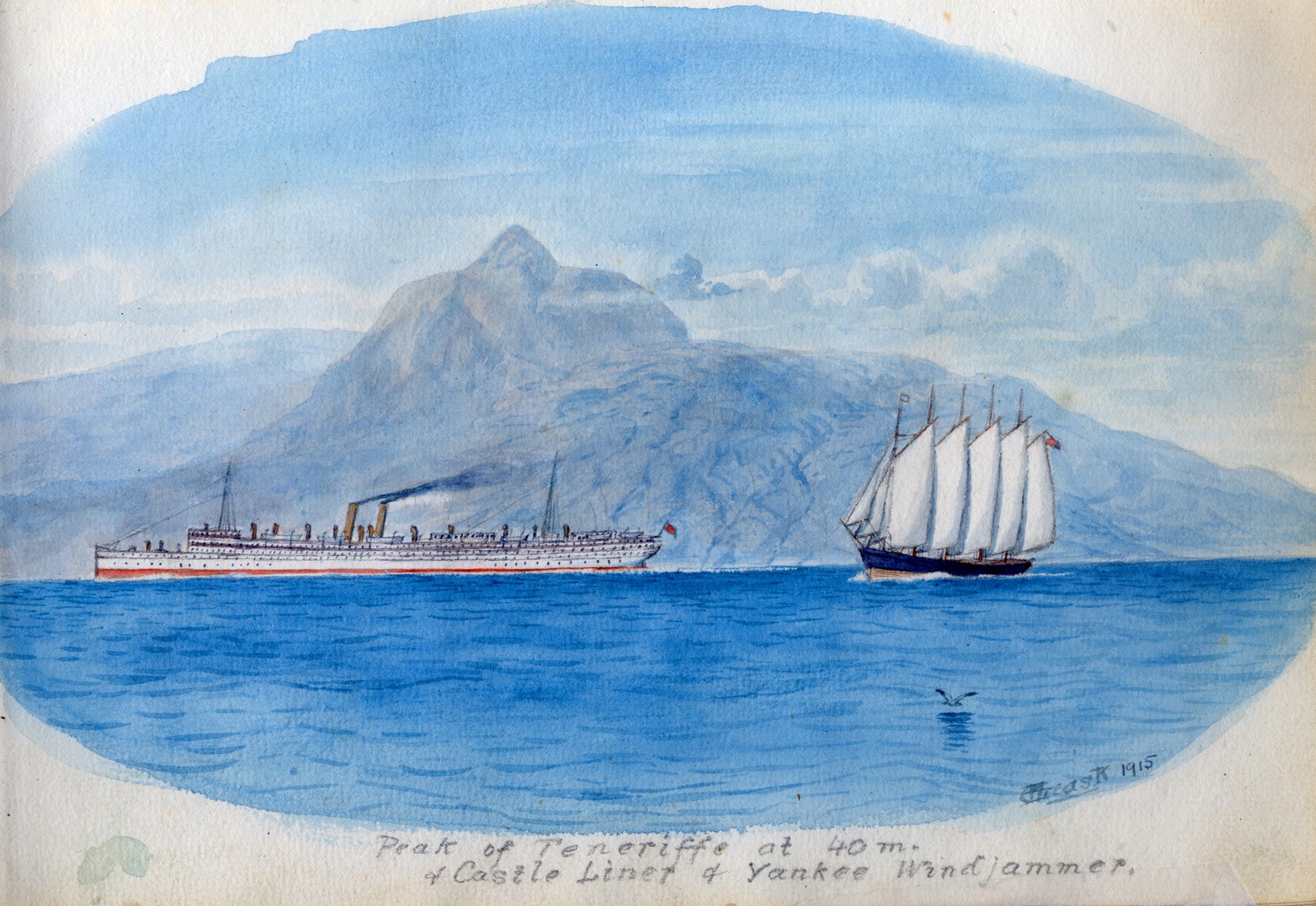
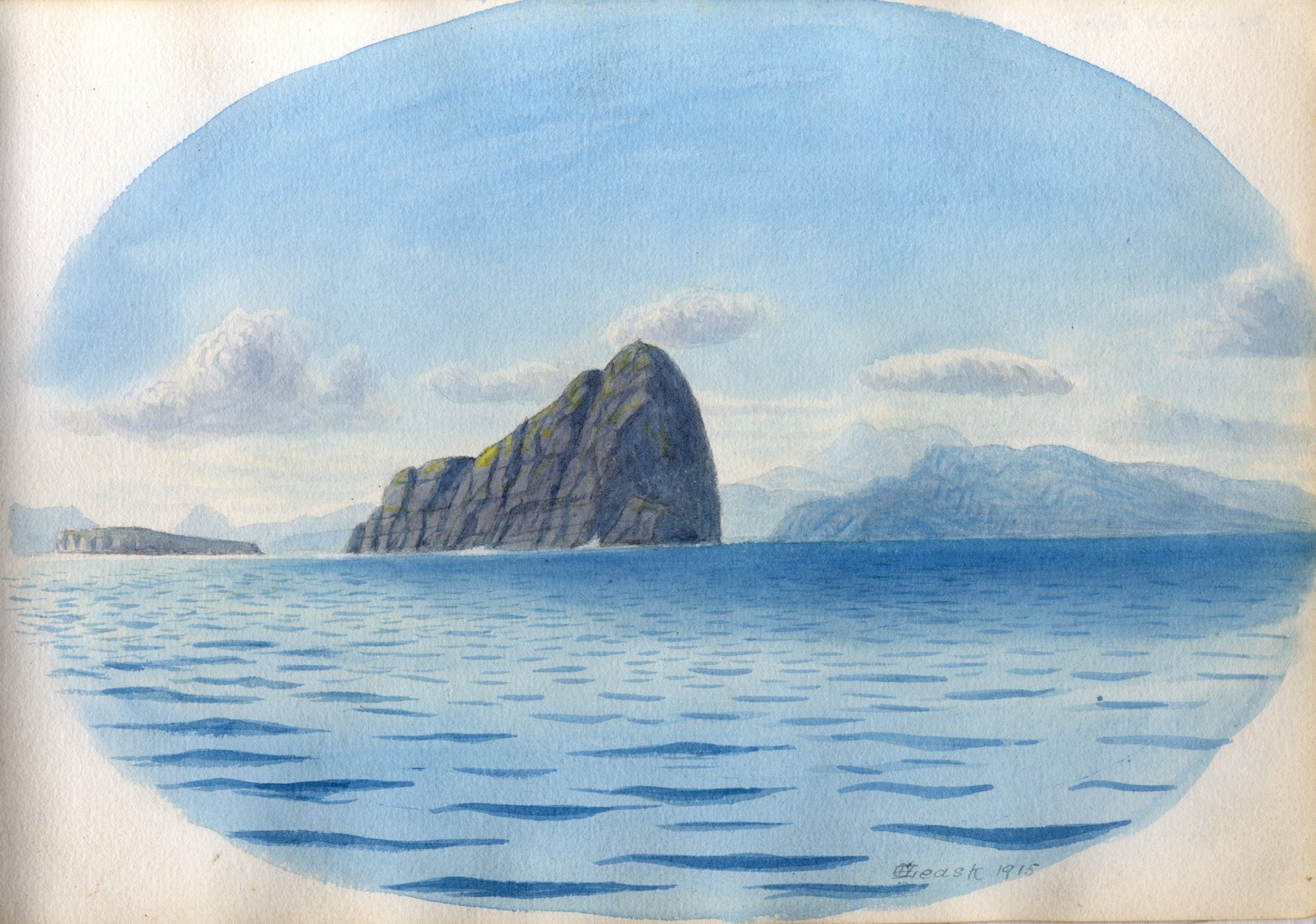
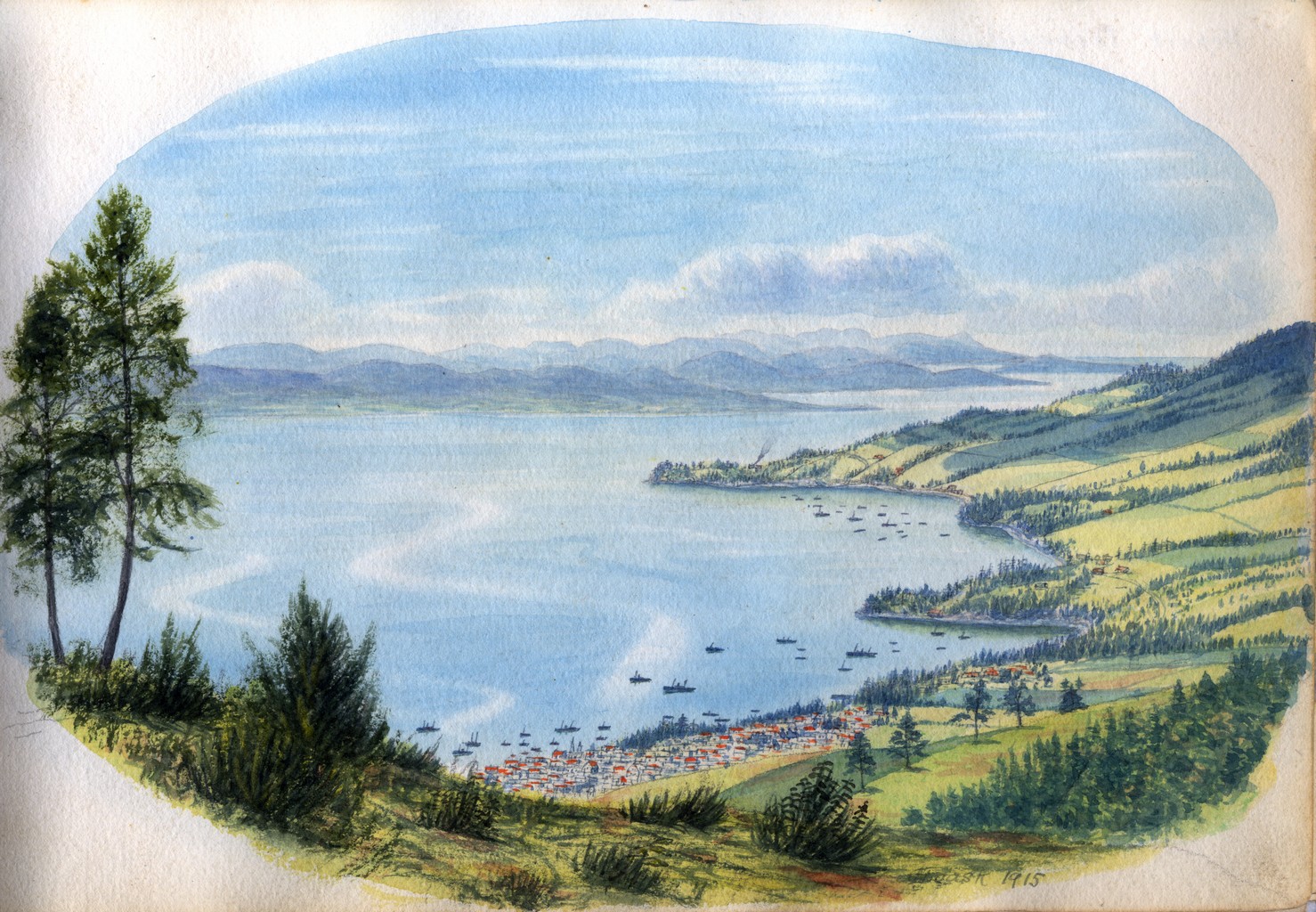
“Outward Bound to New Zealand” in 1915, passing Tenerife.
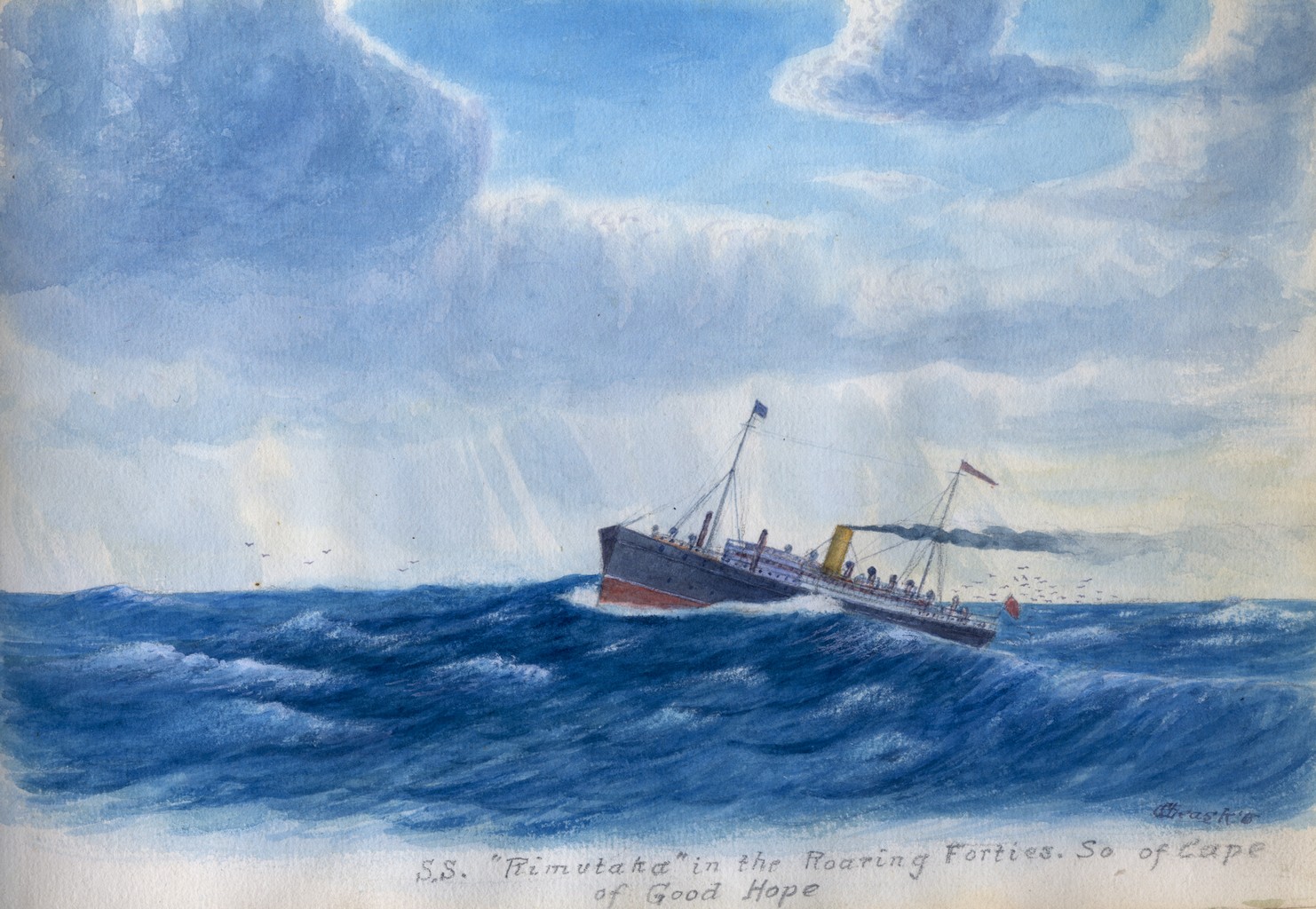
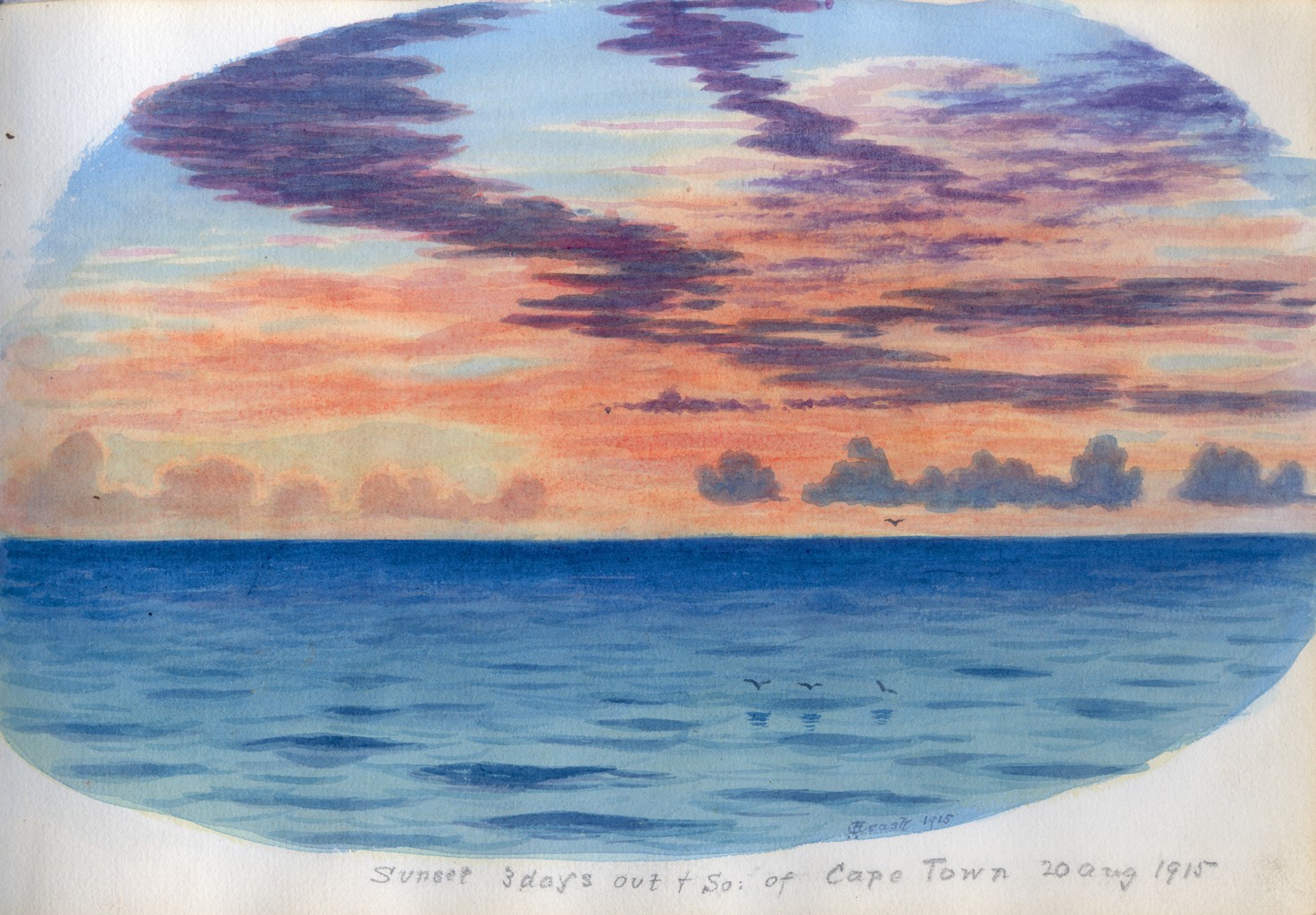
Continuing the voyage past Capetown and the Cape of Good Hope.
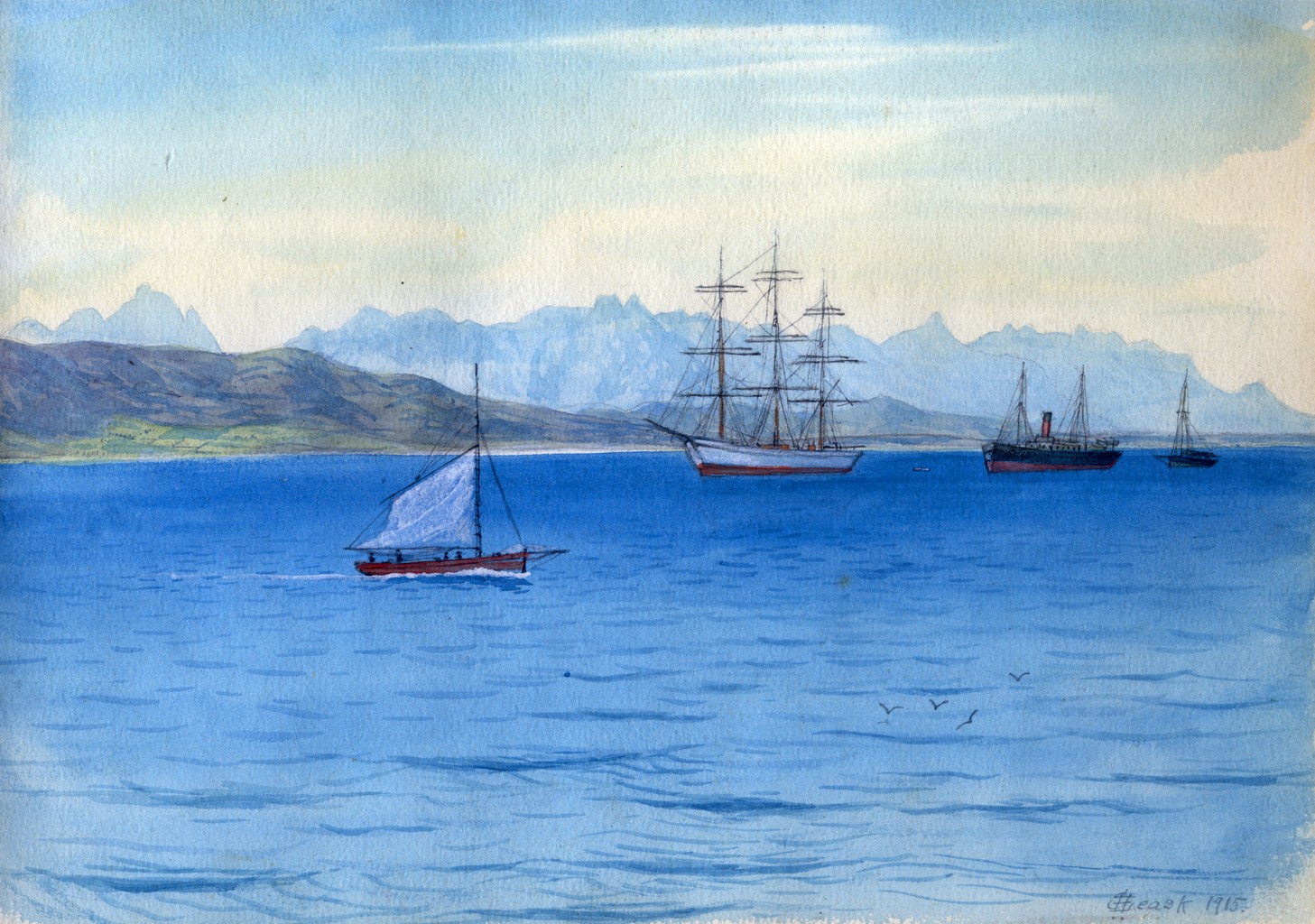
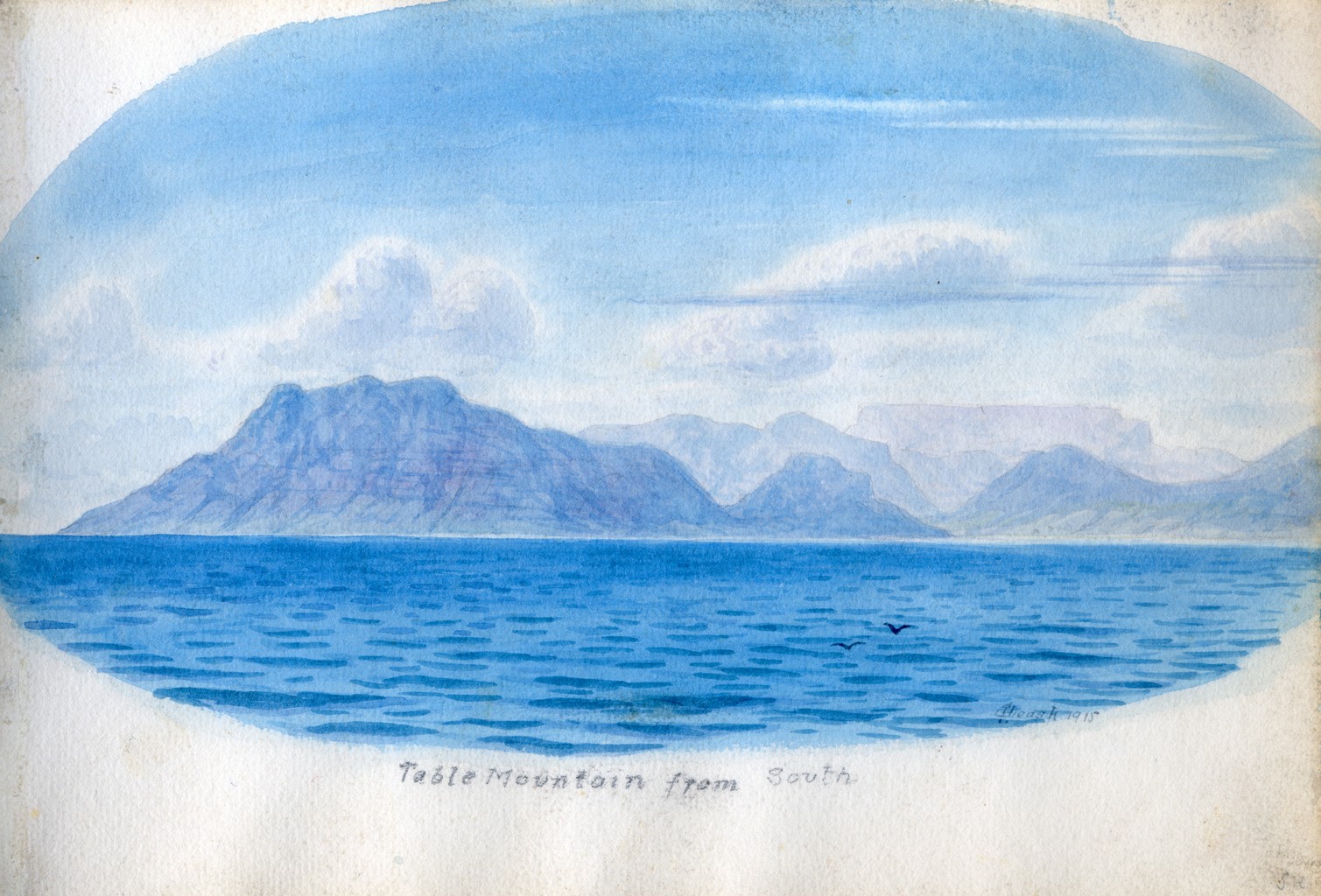
From Cape Town, across the “Roaring Forties”.
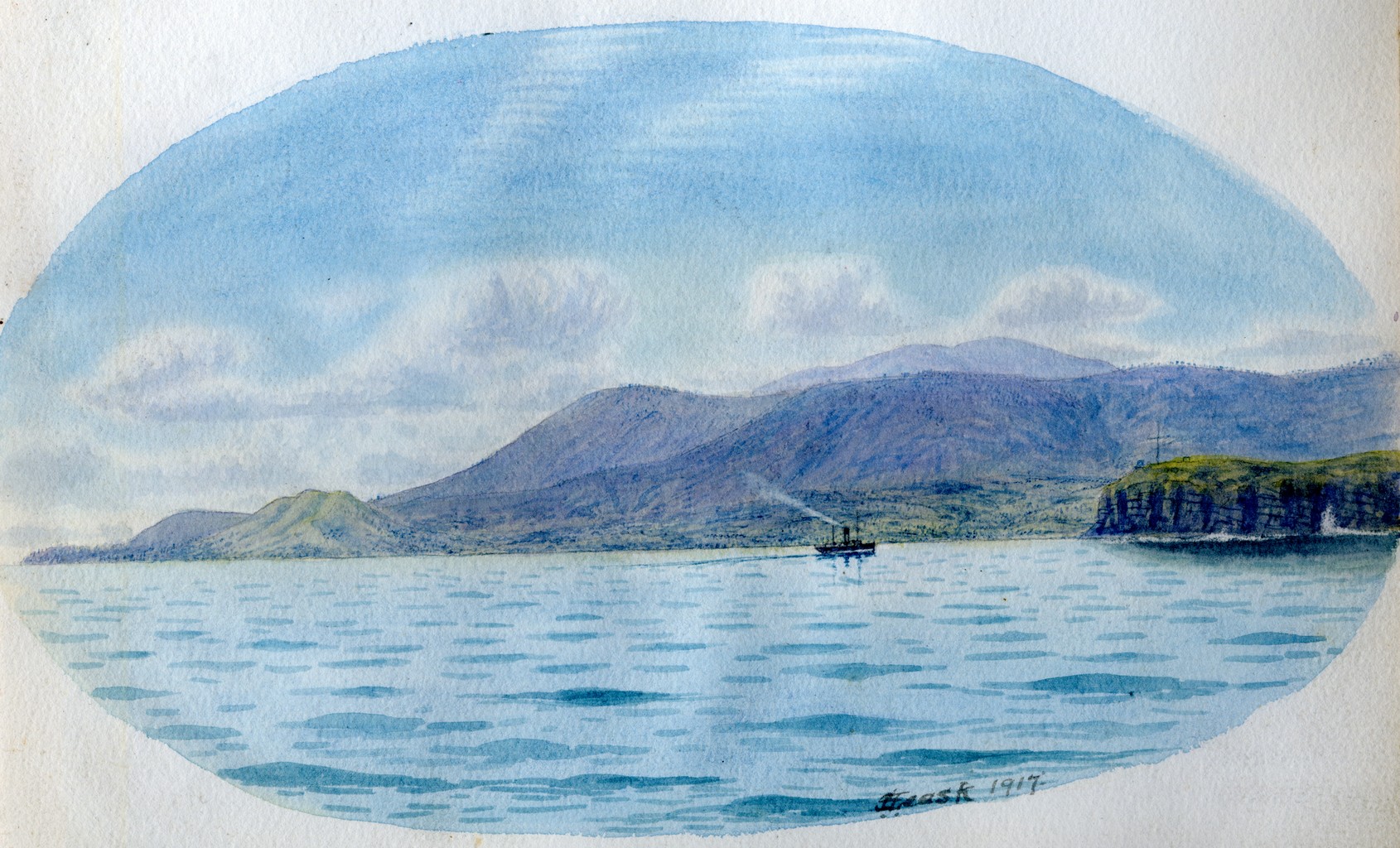
Calling in to Tasmania: (Left) Off South Cape; (Right) Hobart.
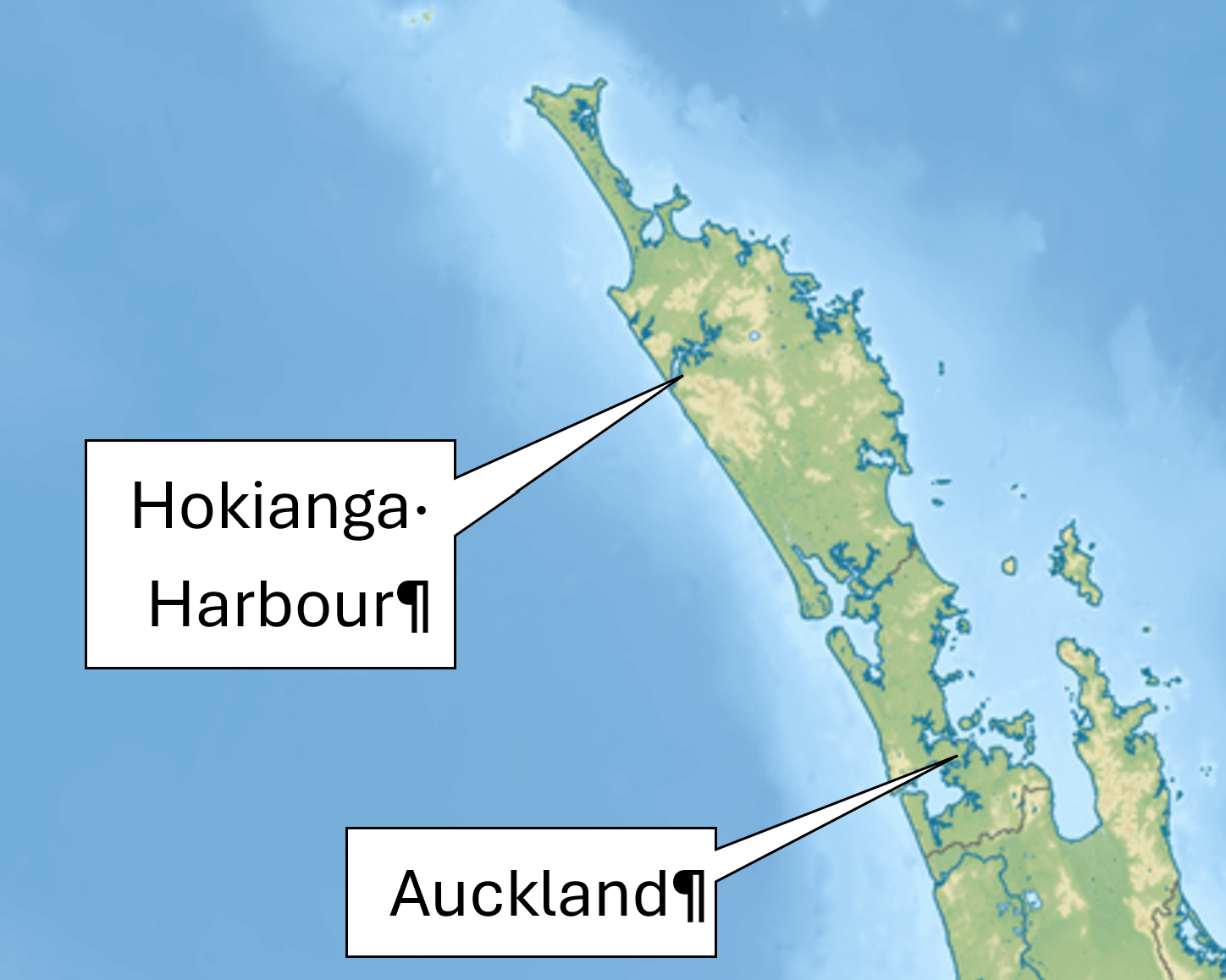
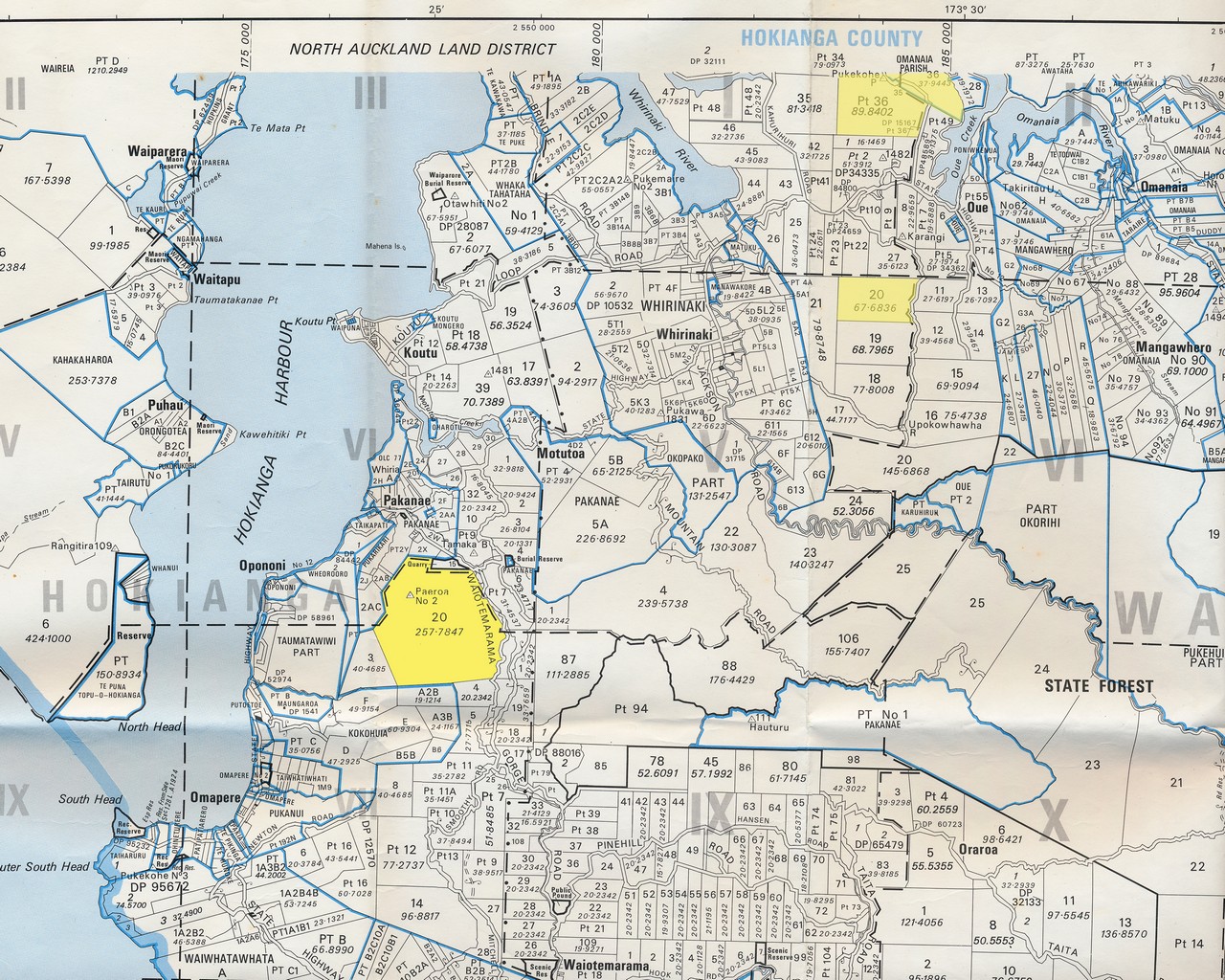
Hokianga Harbour, a large drowned valley system on the west coast of Northland. On the cadastral map, the yellow sections are identified in the captions of the paintings, with the large one in the southwest, Pakanae Section 20 apparently the main property.
The first paintings in the Hokianga area have inscriptions on the back:
“Near Oue, Hokianga, not far from Henry’s section. Dull and raining. Heavy clay soil terraced on surface as shown by cattle”.
“Looking north across the Hokianga – Mungatanawa [Maungataniwha?] in distance. The 2 fields shown are in [Oue] Section 36” (the northernmost of the three sections on the cadastral map).
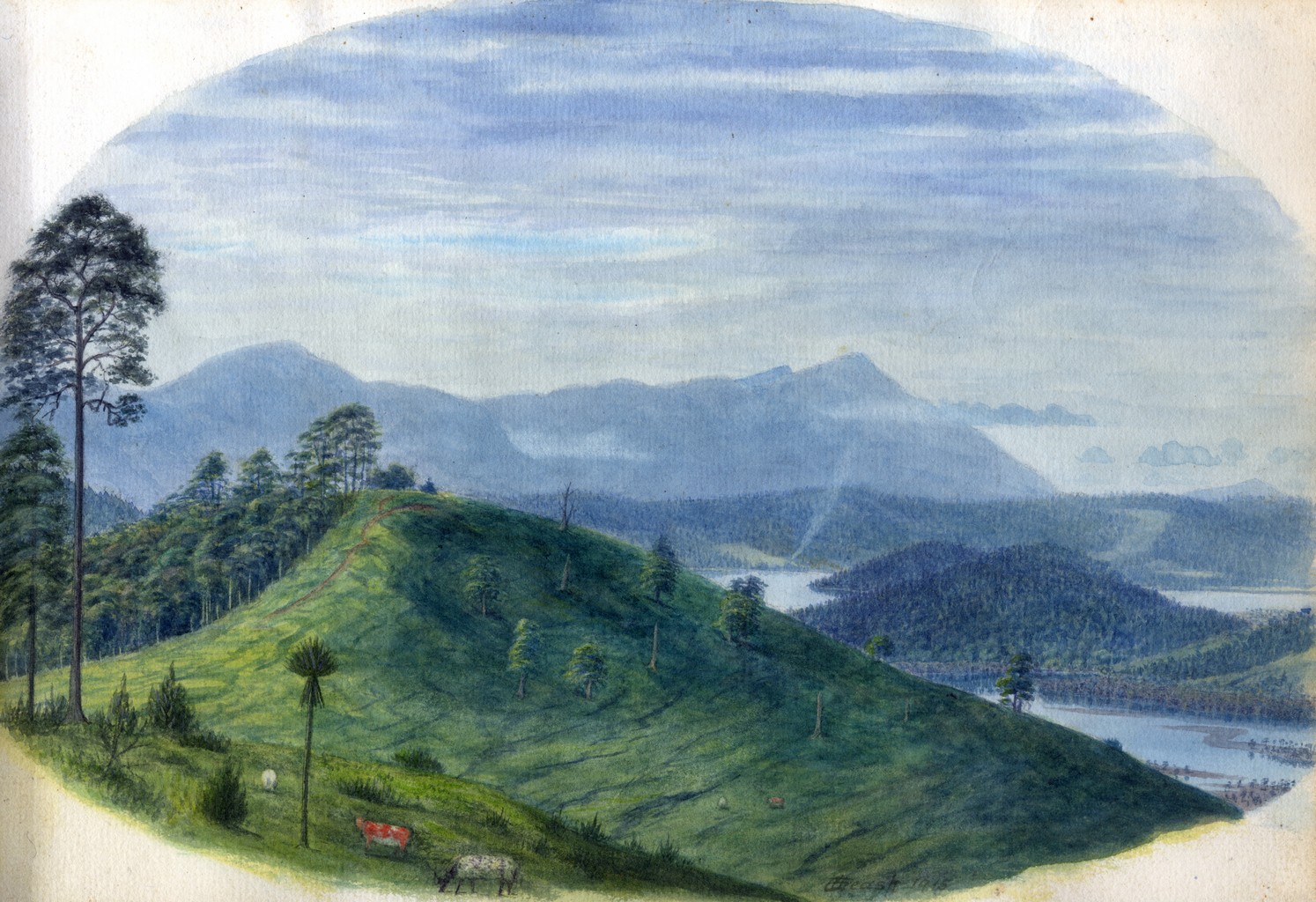
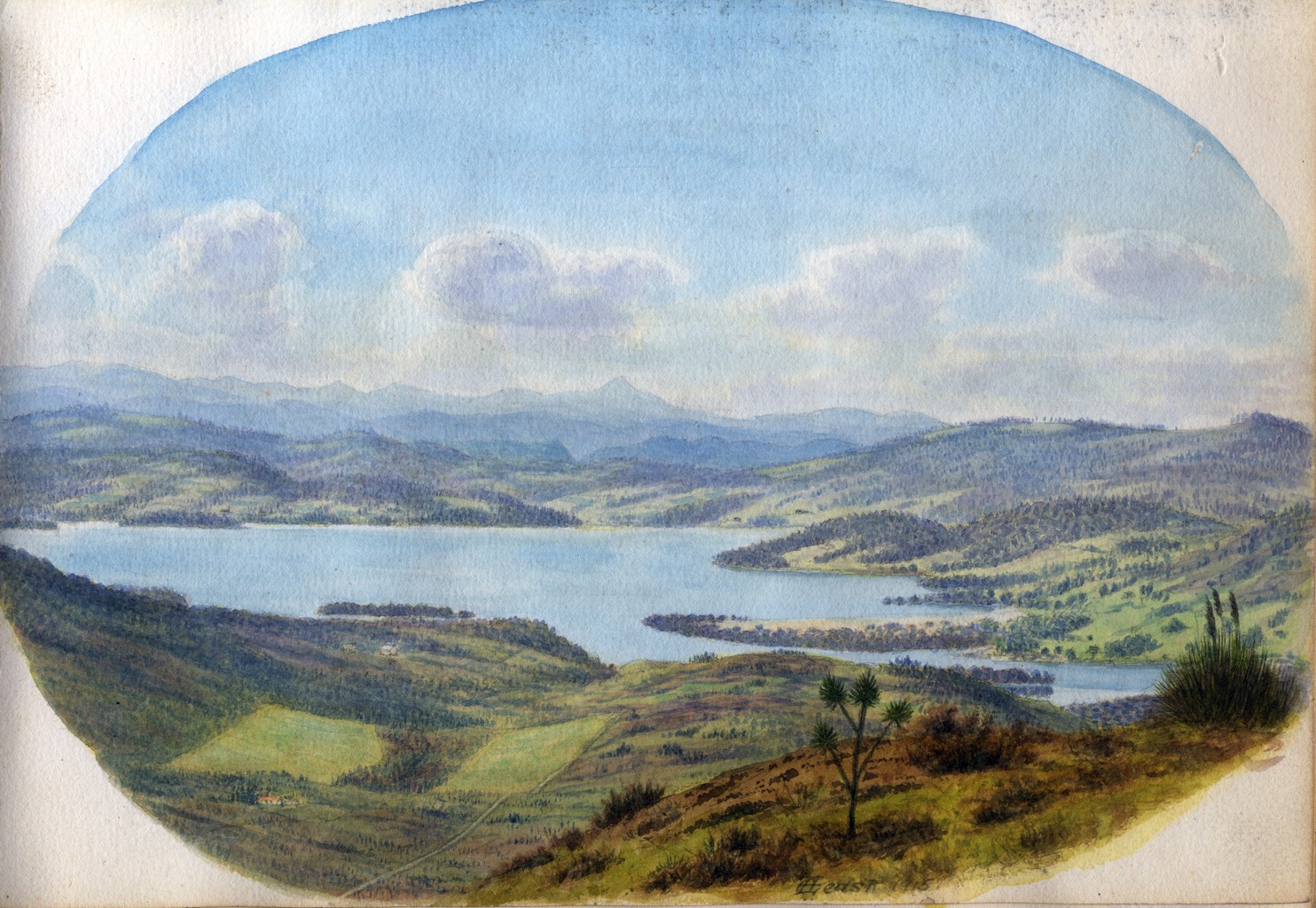
“A Hokianga dairy ranch near Section 20 Oue. H. King’s ranch”.
“Onoke and Vipont’s ranch and Pungaru Range. Dull and raining”.
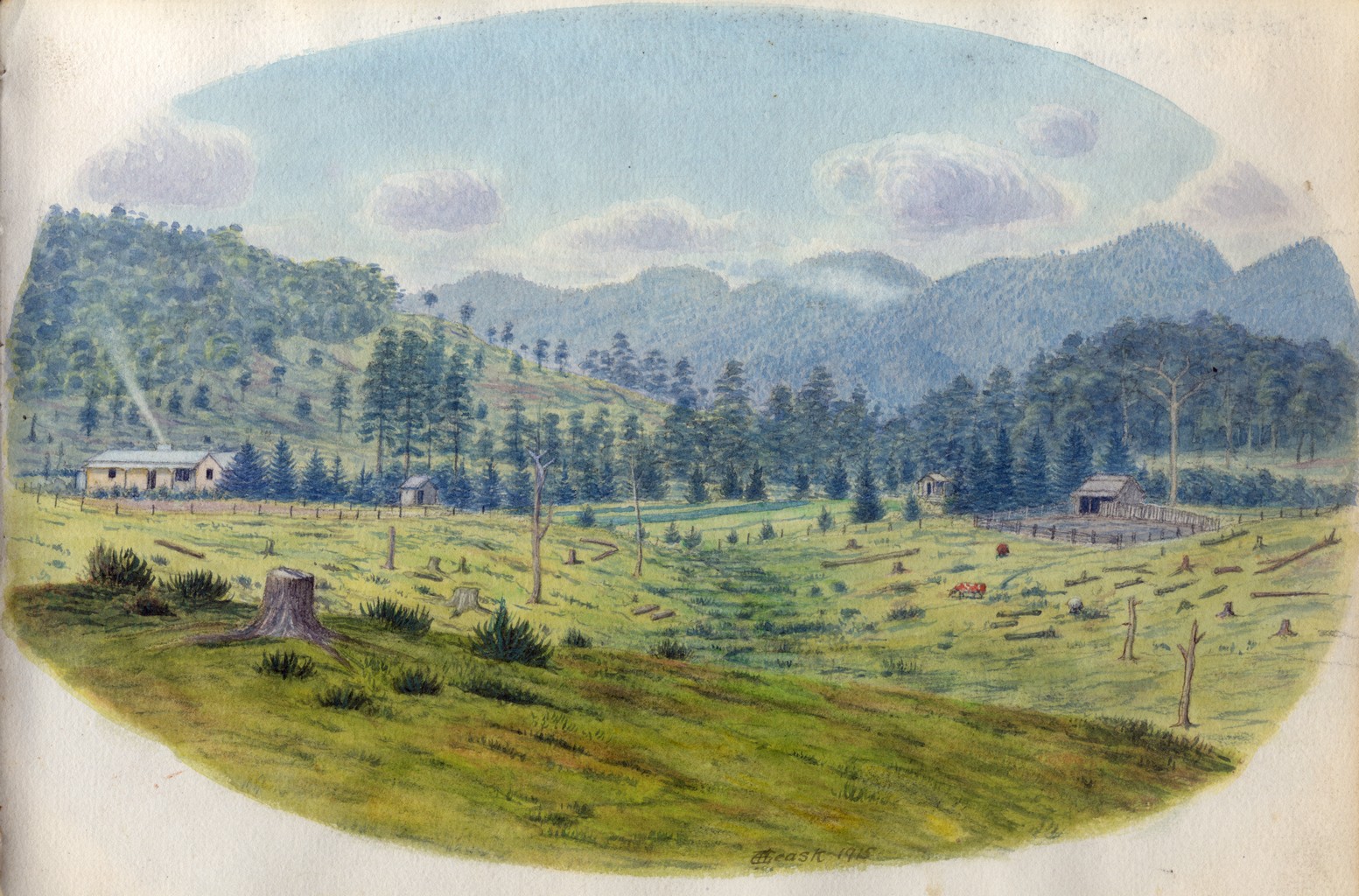
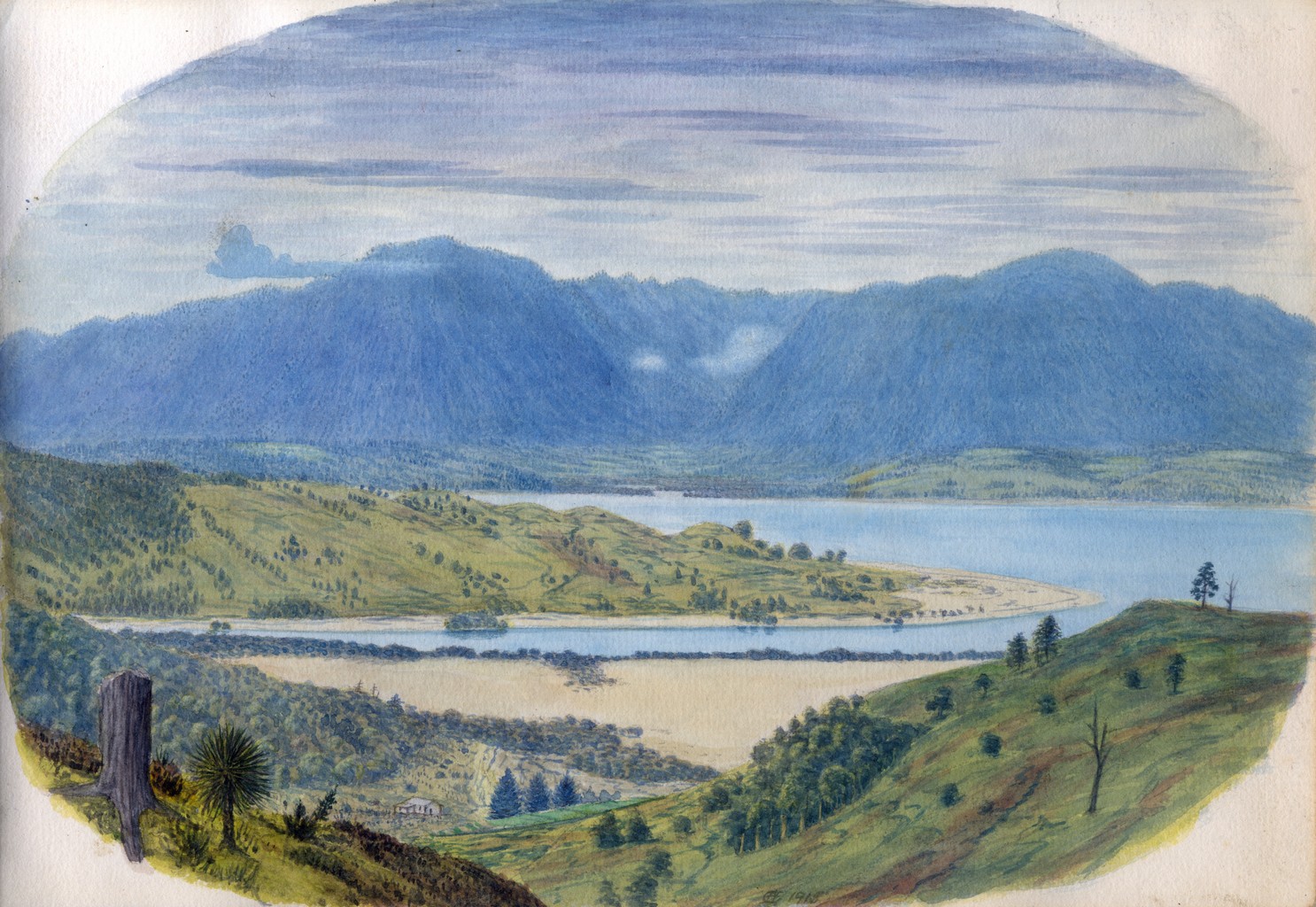
“Leask’s section No.20 Oue [the middle section on the cadastral map]. This sketch was taken too far from Henry’s section to show the house which however is faintly seen”.
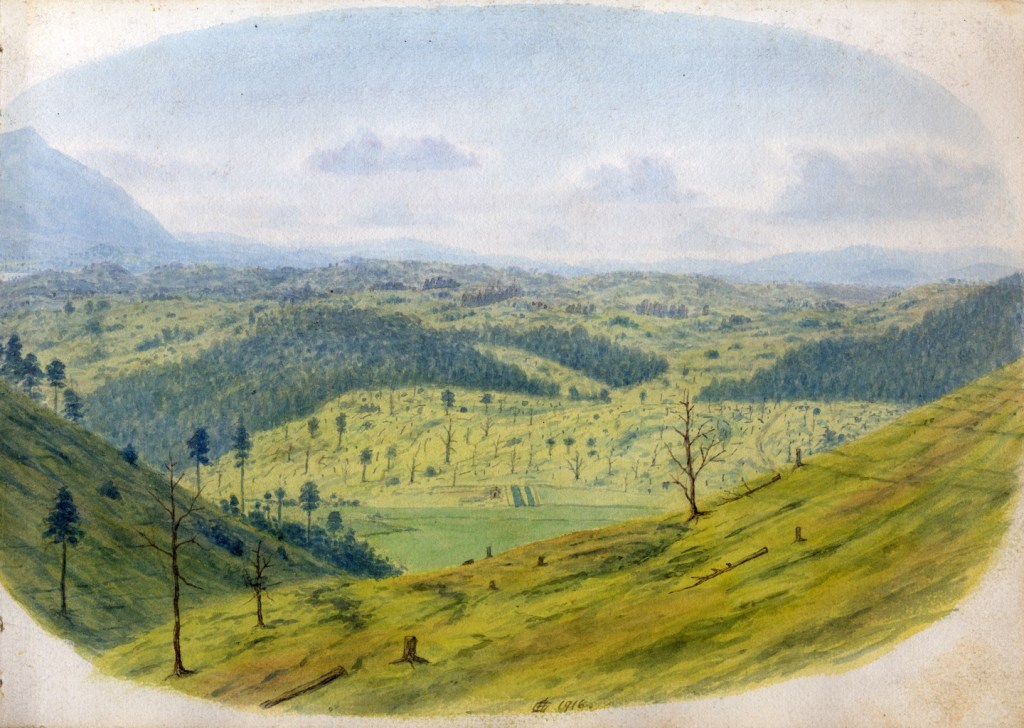
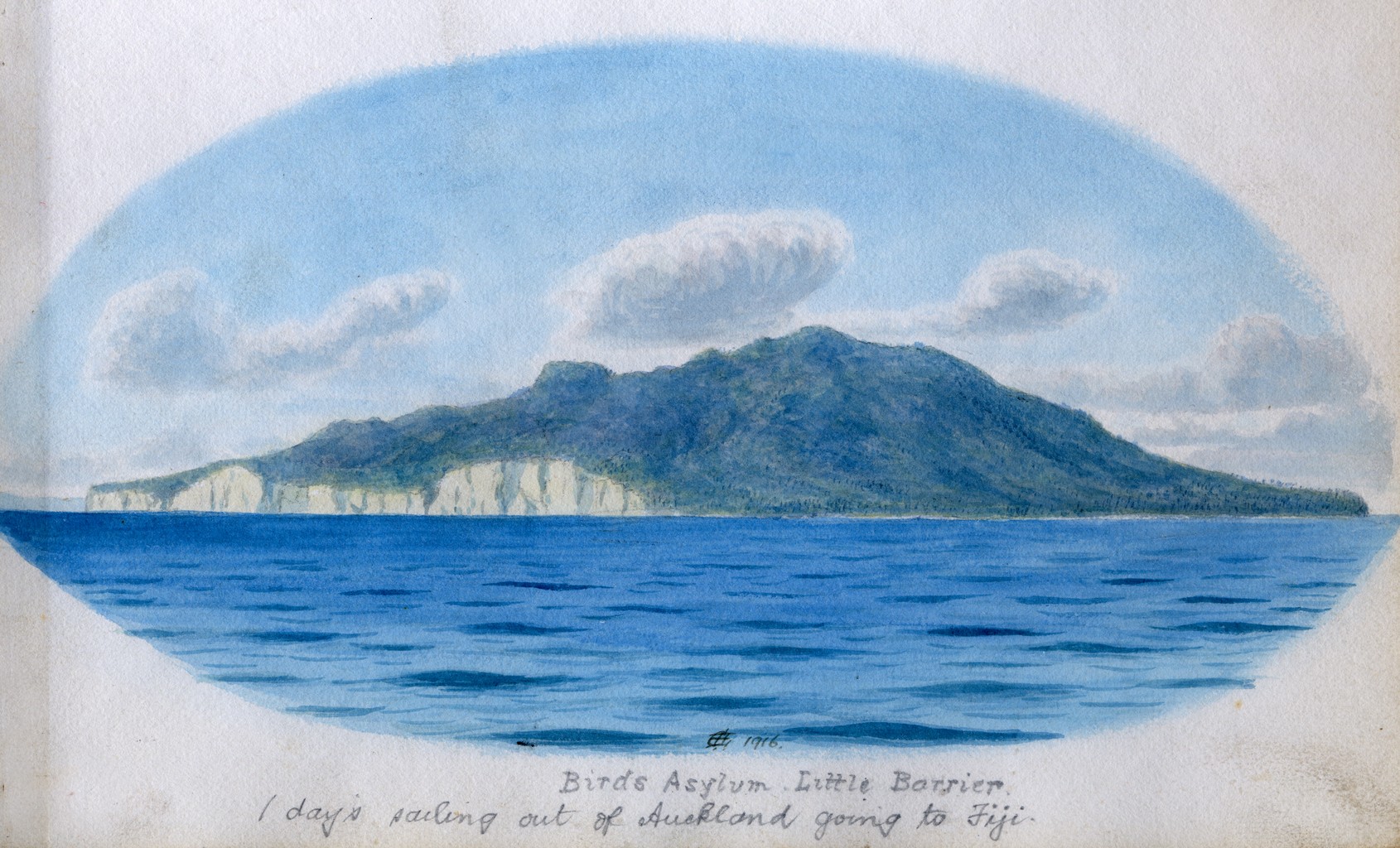
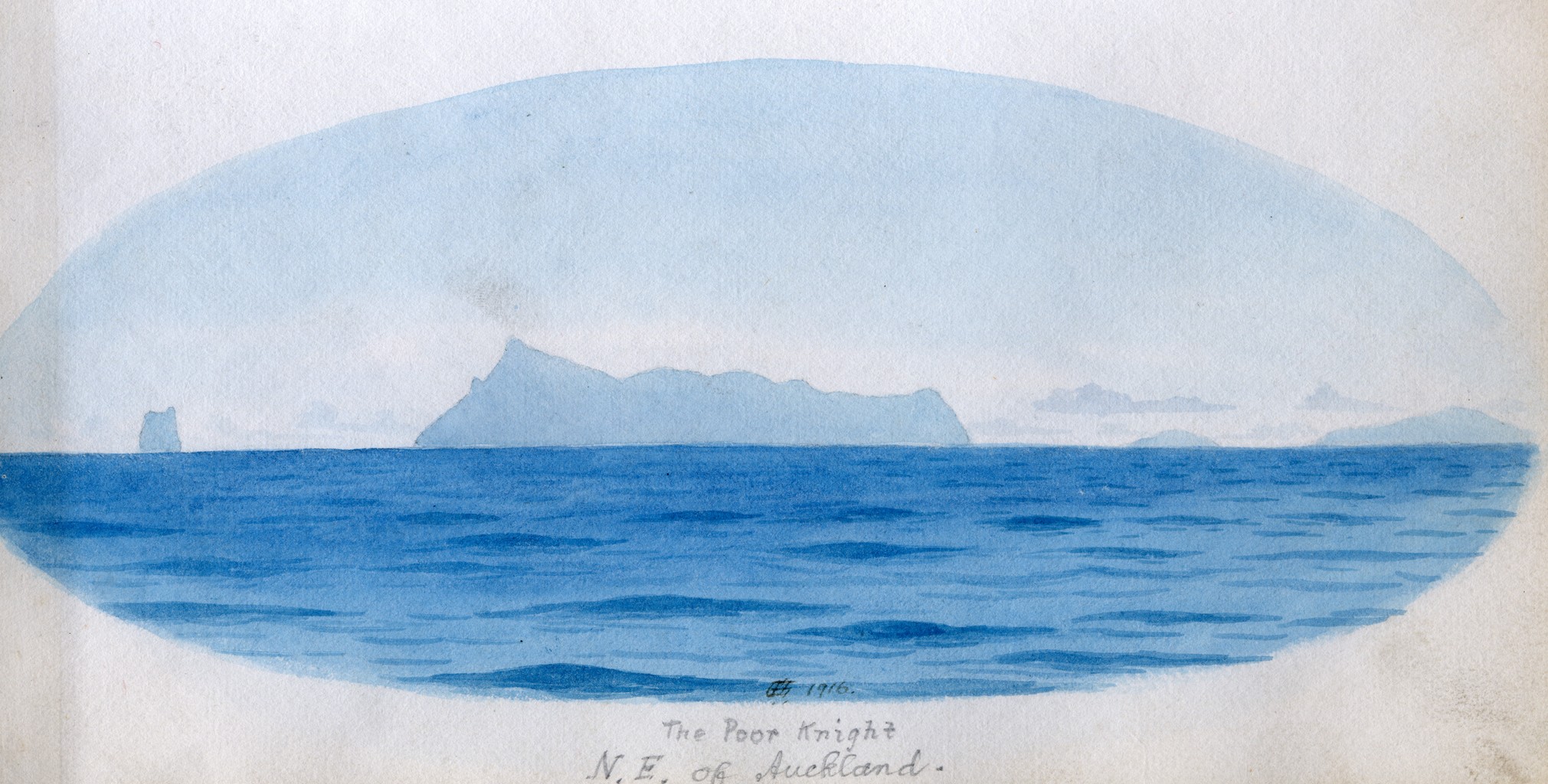
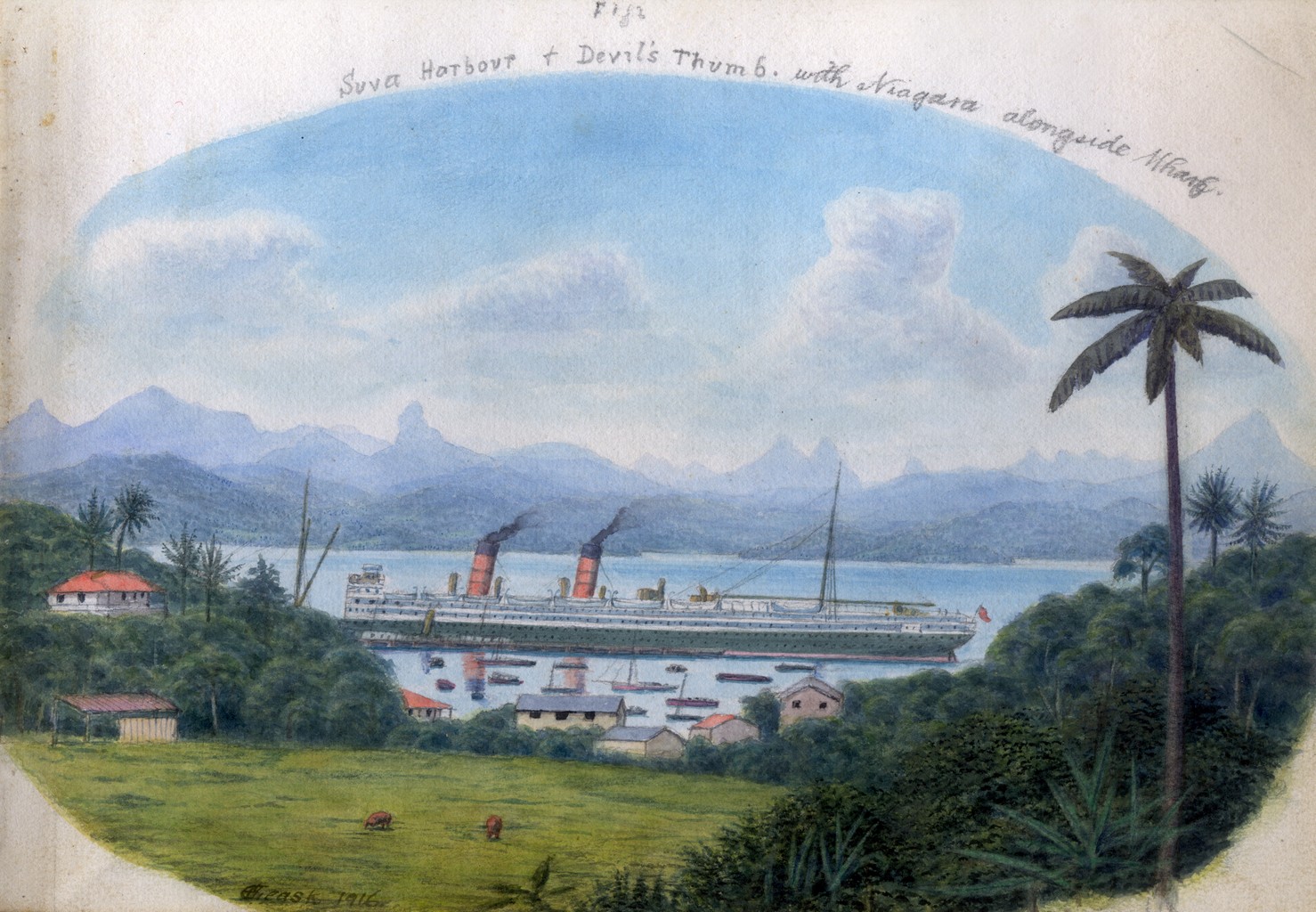
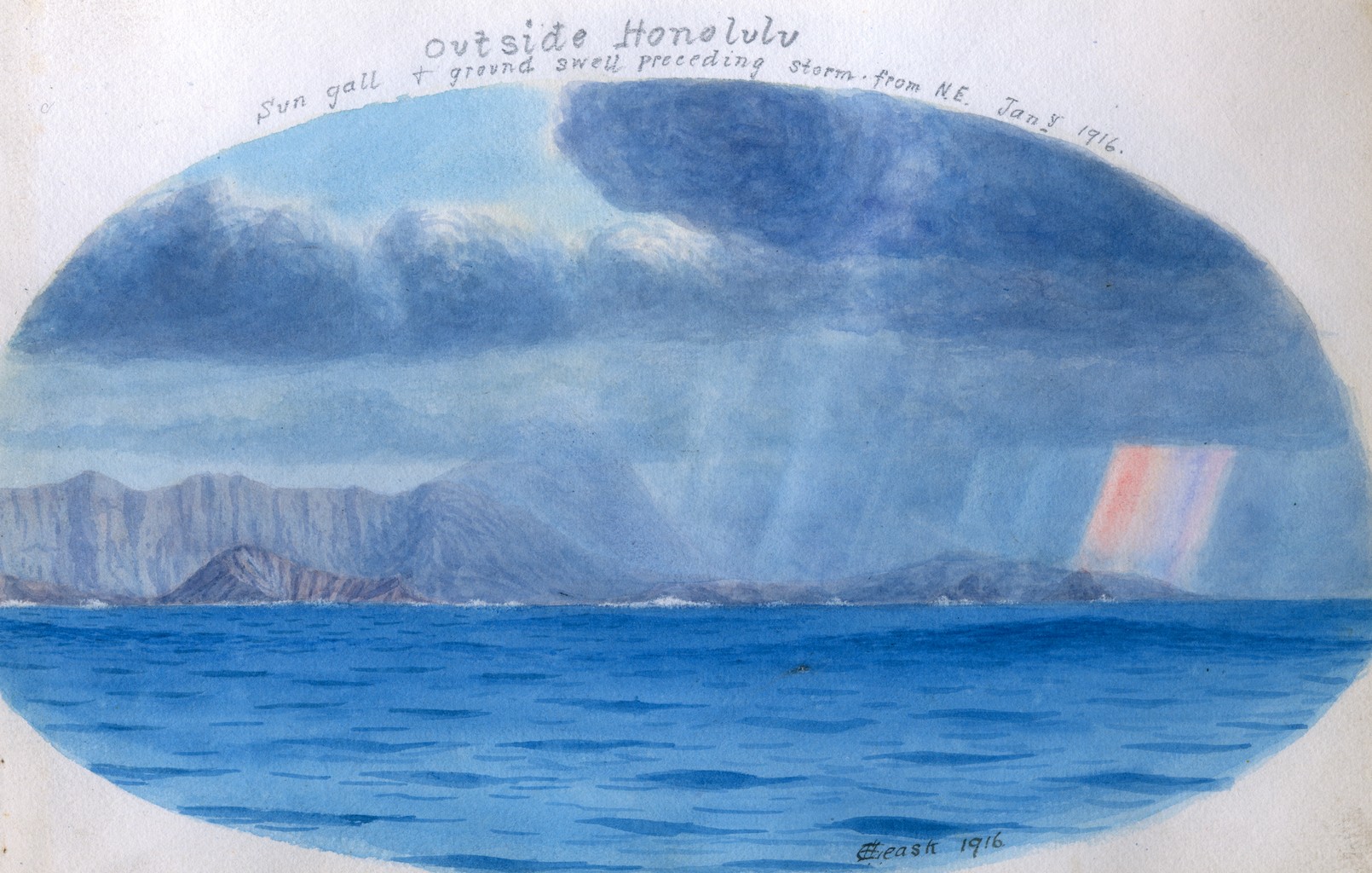
The next paintings, in 1916, show a voyage from New Zealand on SS Niagara through Fiji and Honolulu, presumably to Canada. While World War One raged around them, they (or at least the artist) were trotting back and forth between New Zealand and Canada like perennial cruise-ship tourists!
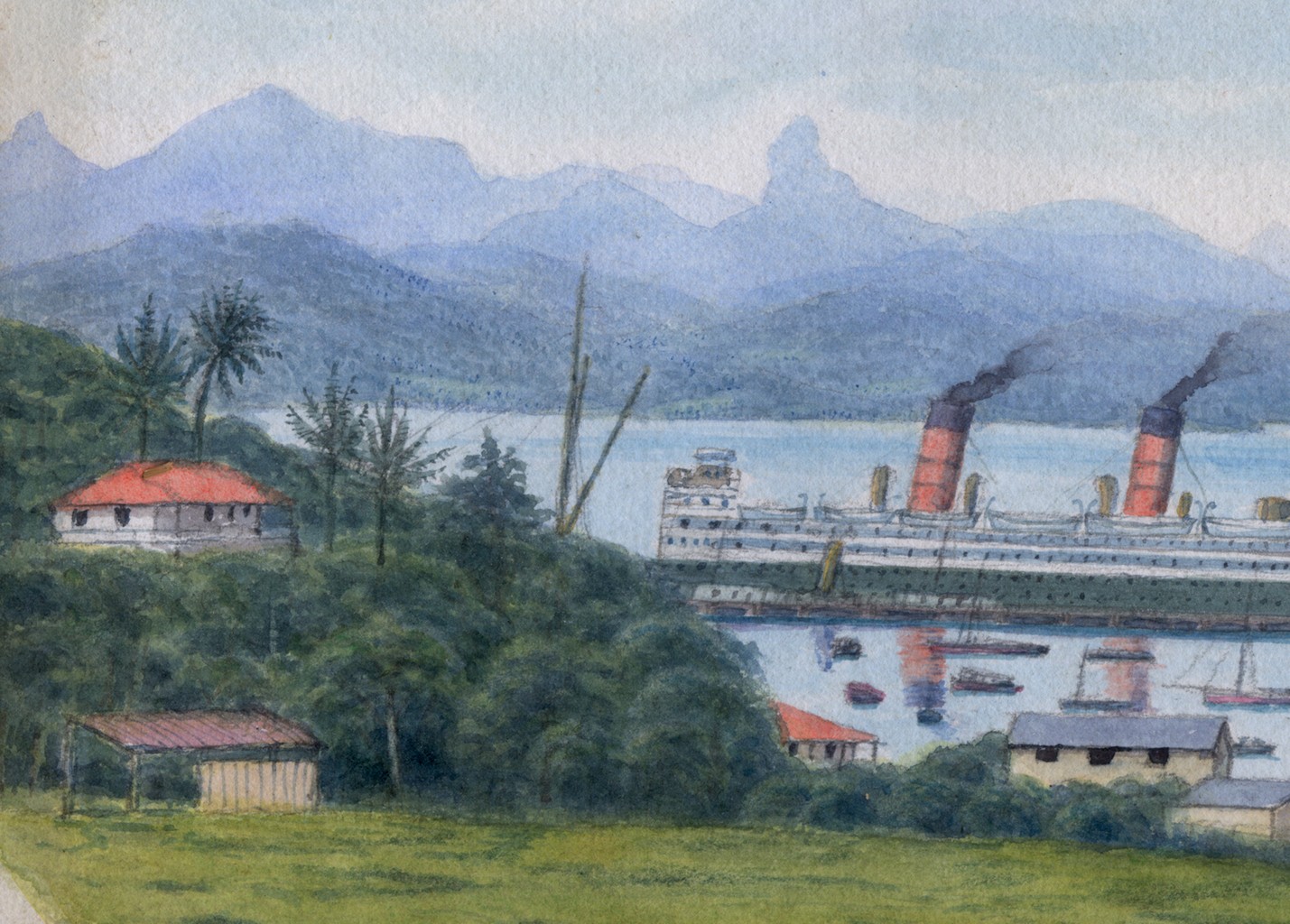
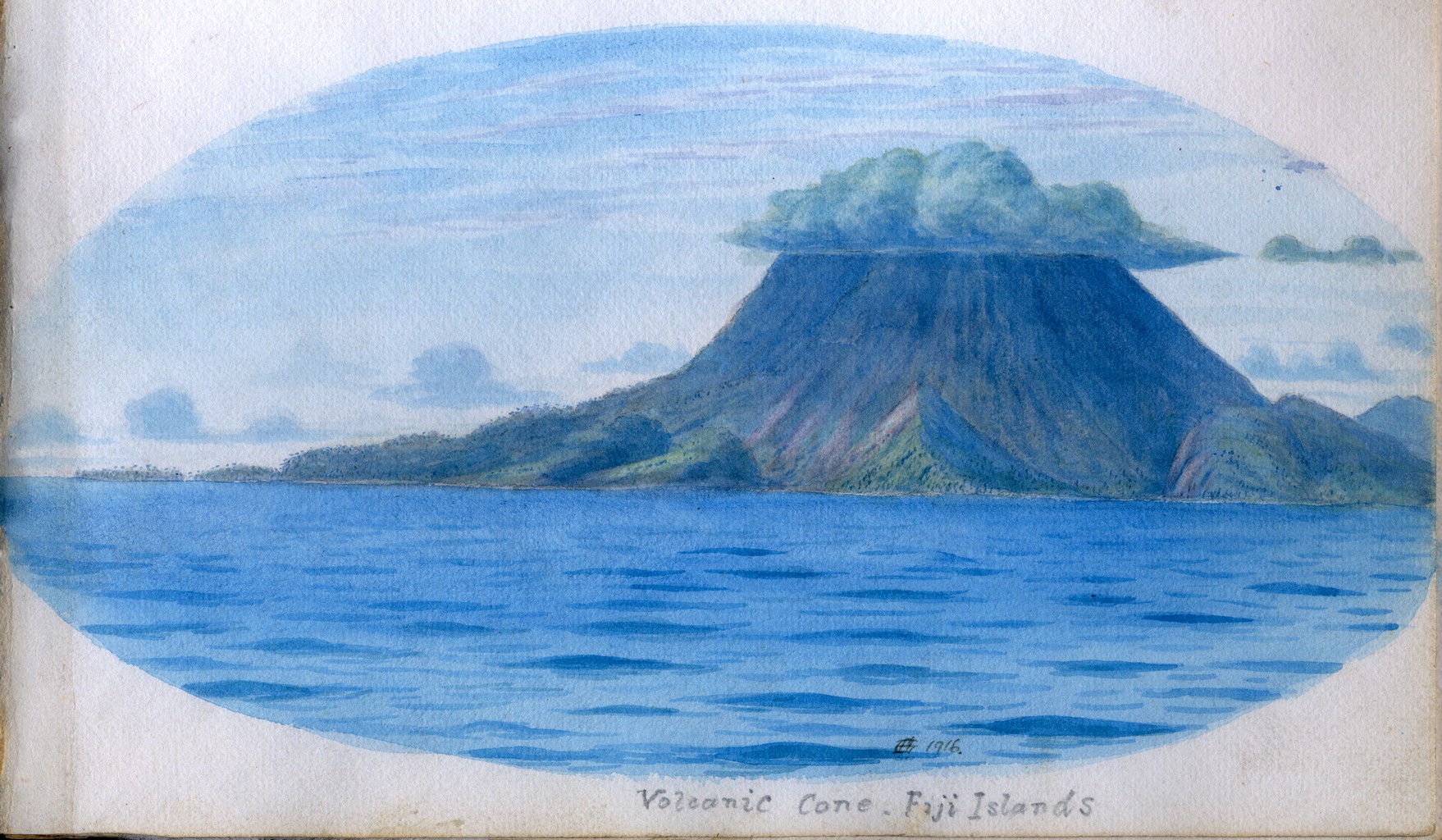
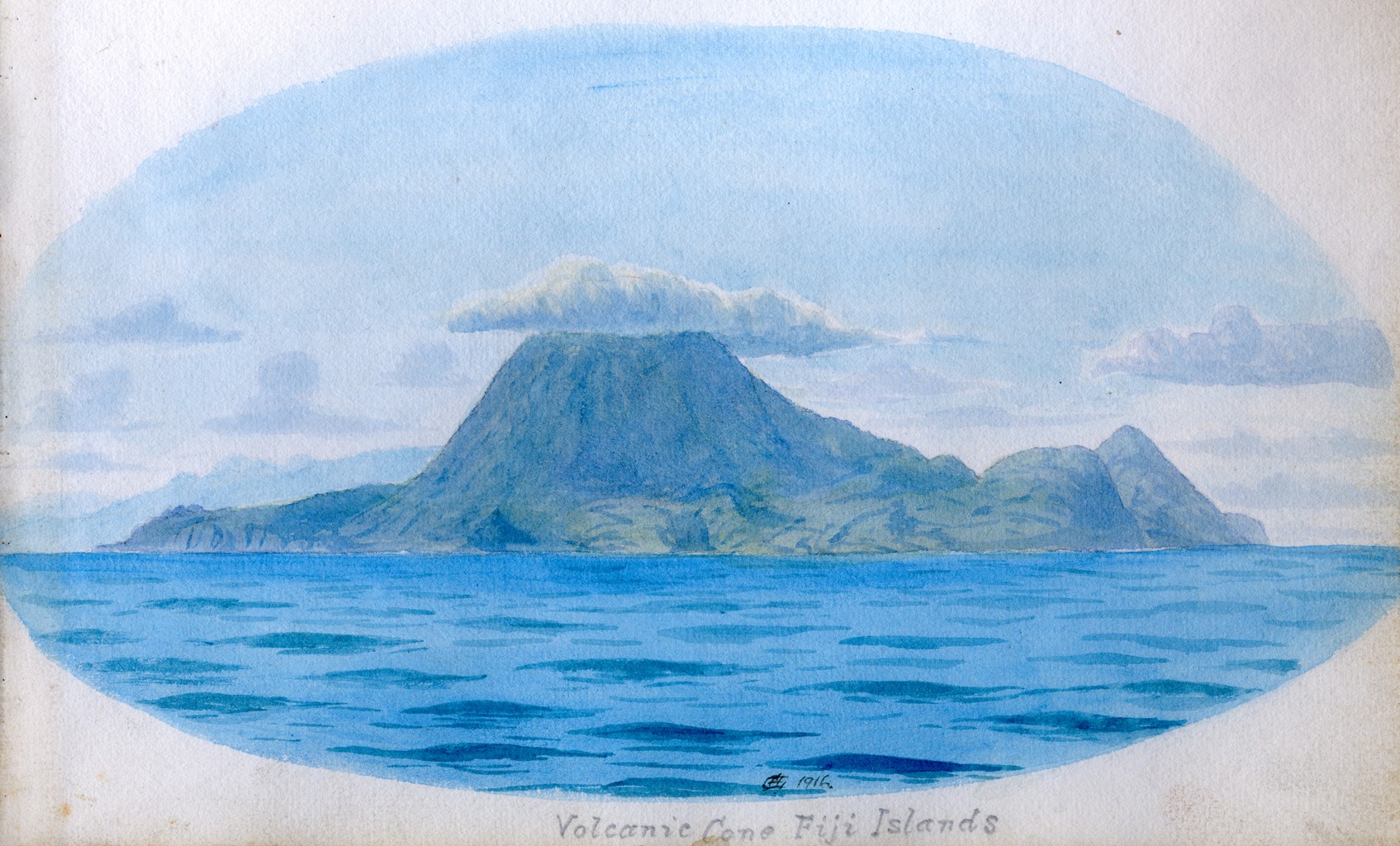
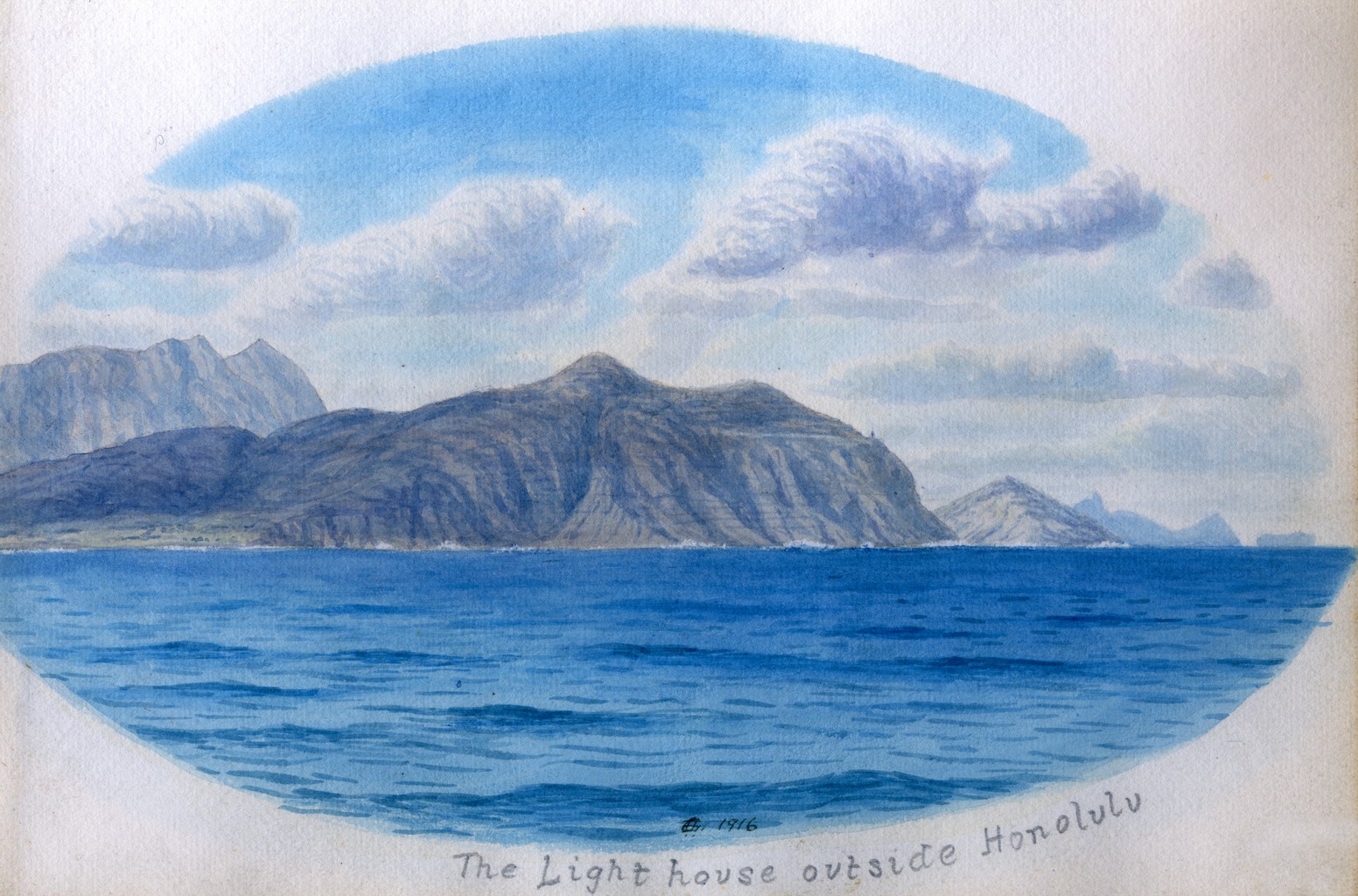
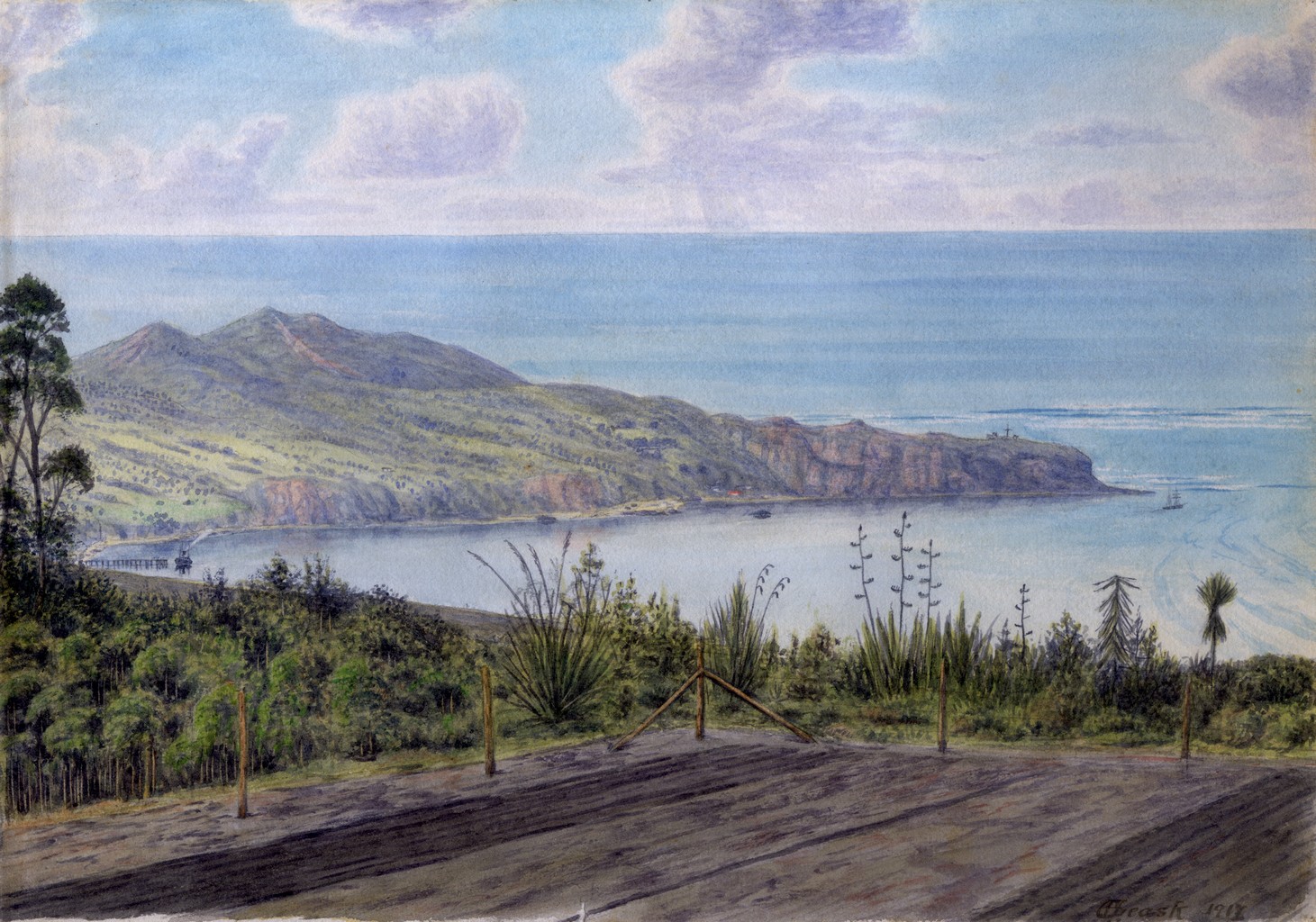
The Hokianga paintings resume in 1917 from the No.2 Opononi section, a 258 ha block on a steep-sided hill called Paeroa, 310 m high. “Hokianga South Head and Semaphore Signal Station from Henry’s house at Opononi”.
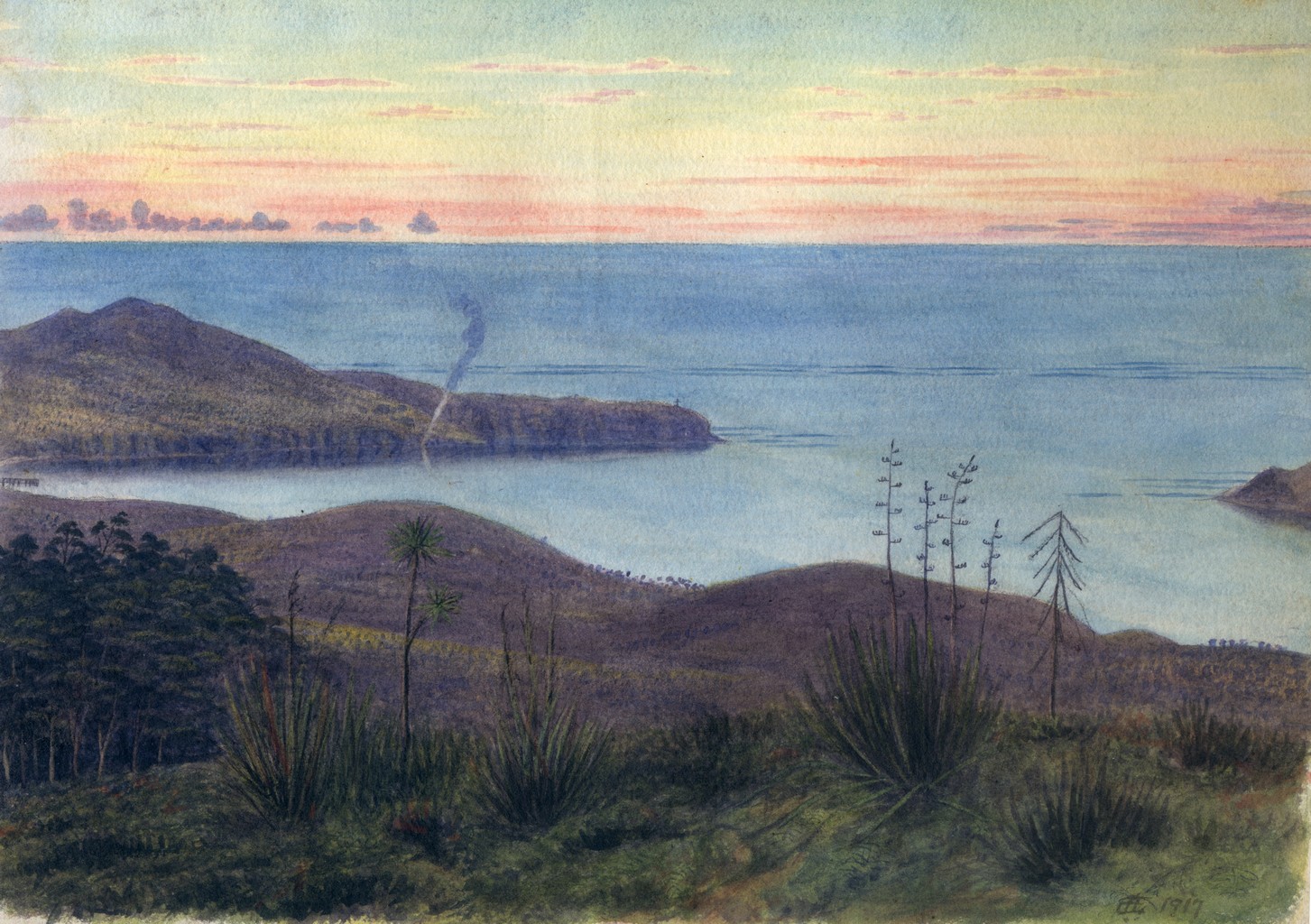
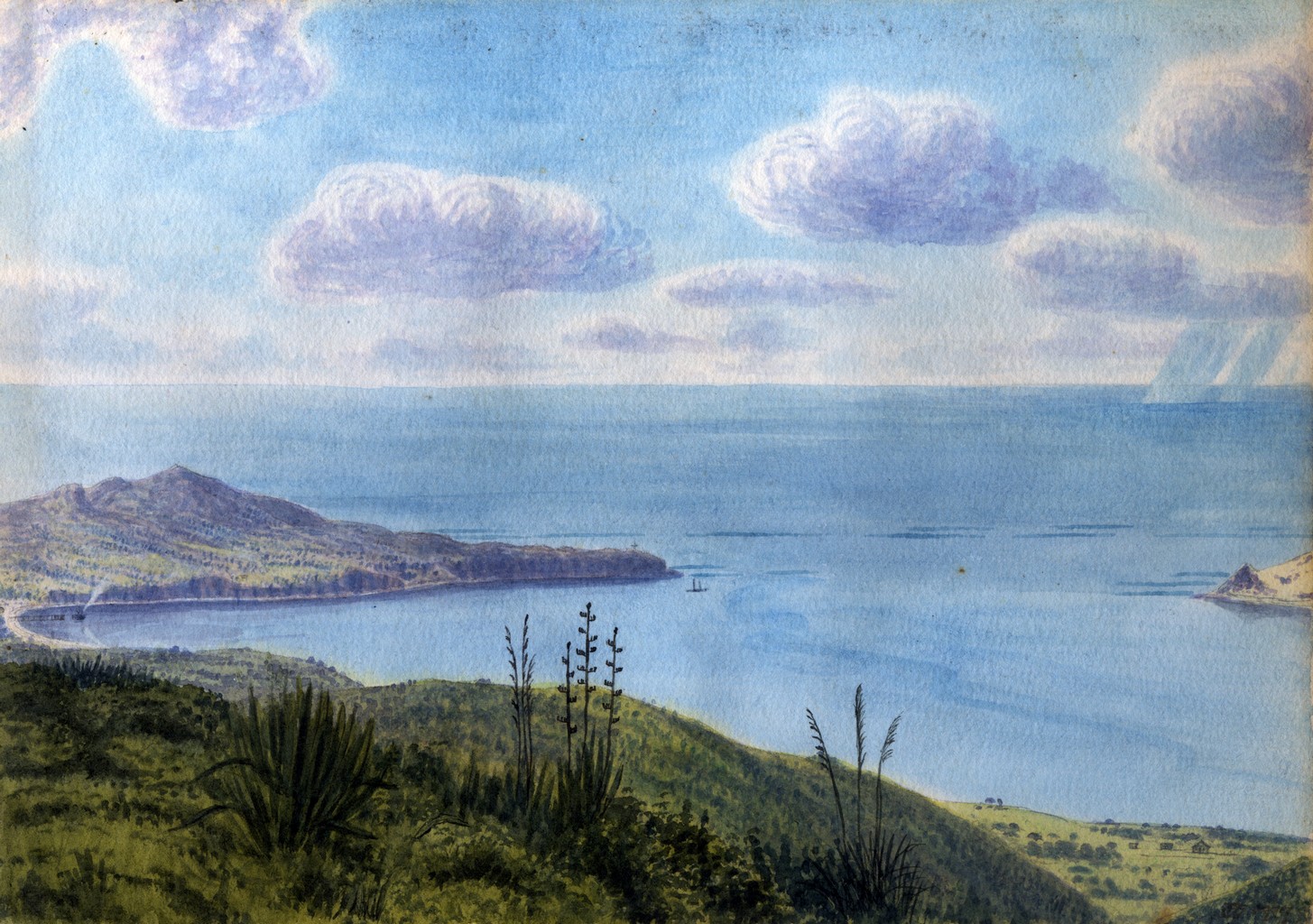
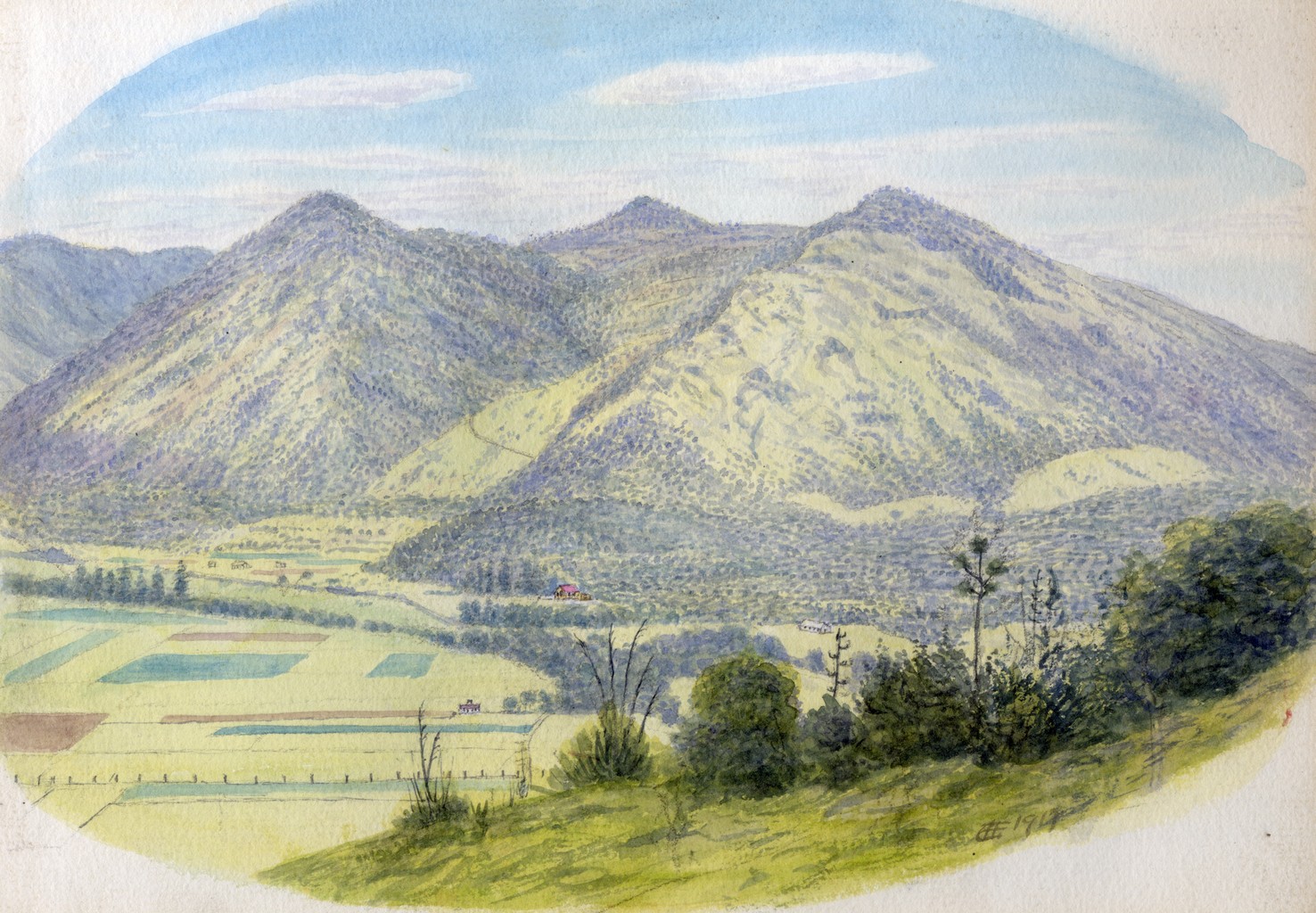
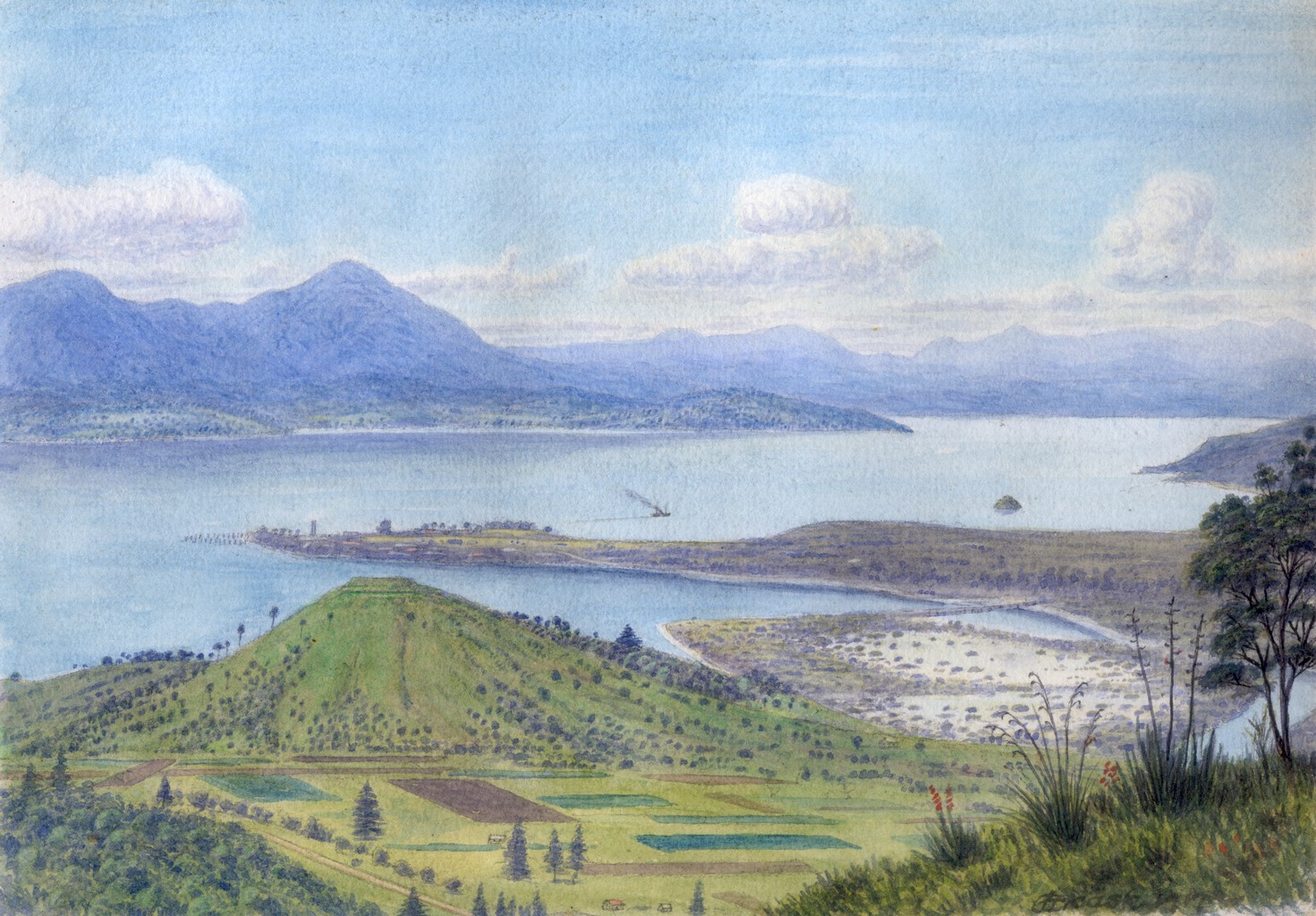
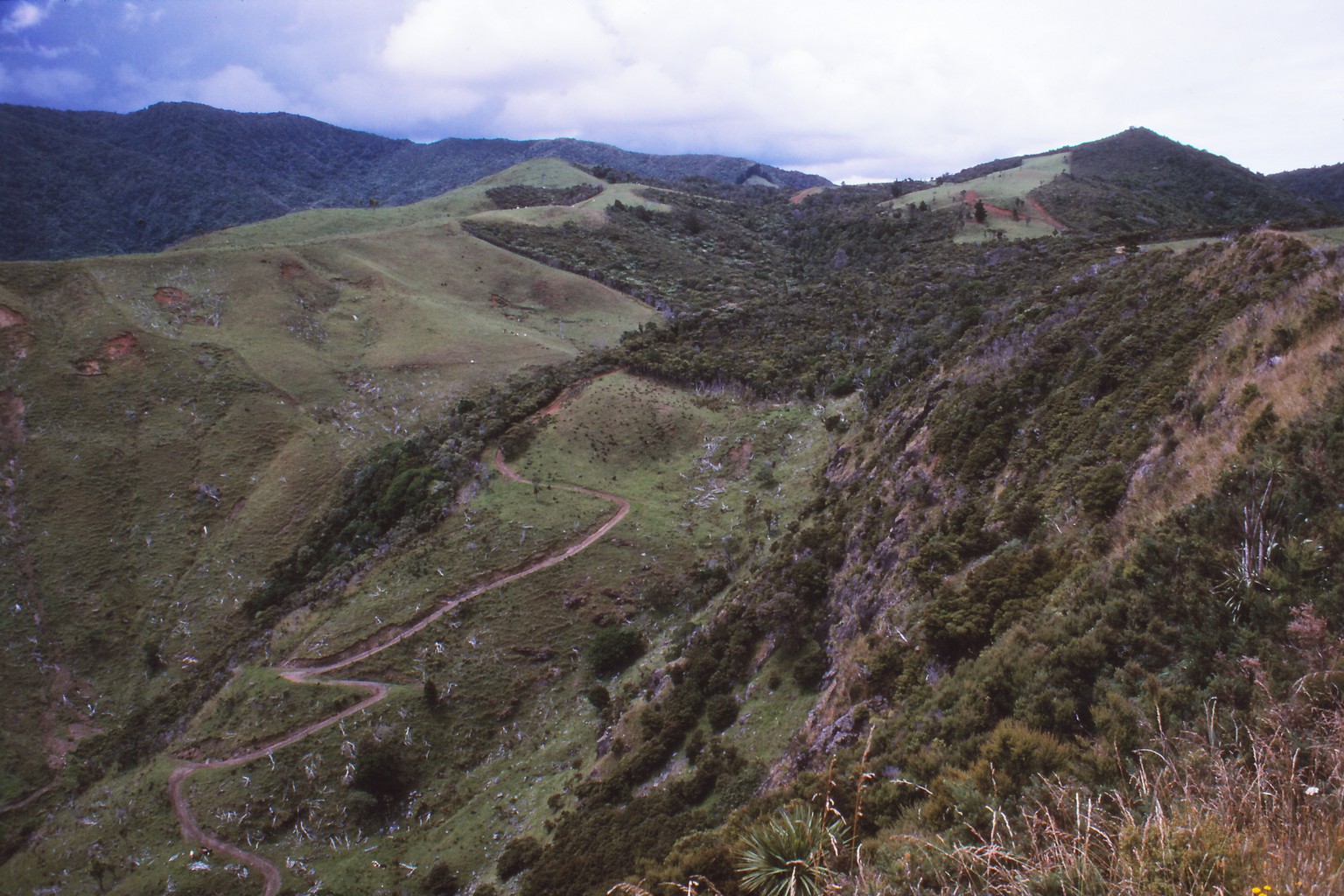
“Pakanae, Hokianga. The 3 mountainous heights are on Henry’s section 20 Opononi, and his house is on the level behind the height to the right. The curves line on green patch in centre of sketch is the approach road to Henry’s house. Maori houses on cultivated ground in front. The red roof is a school house, and to the right of the latter is a Maori dance hall”.
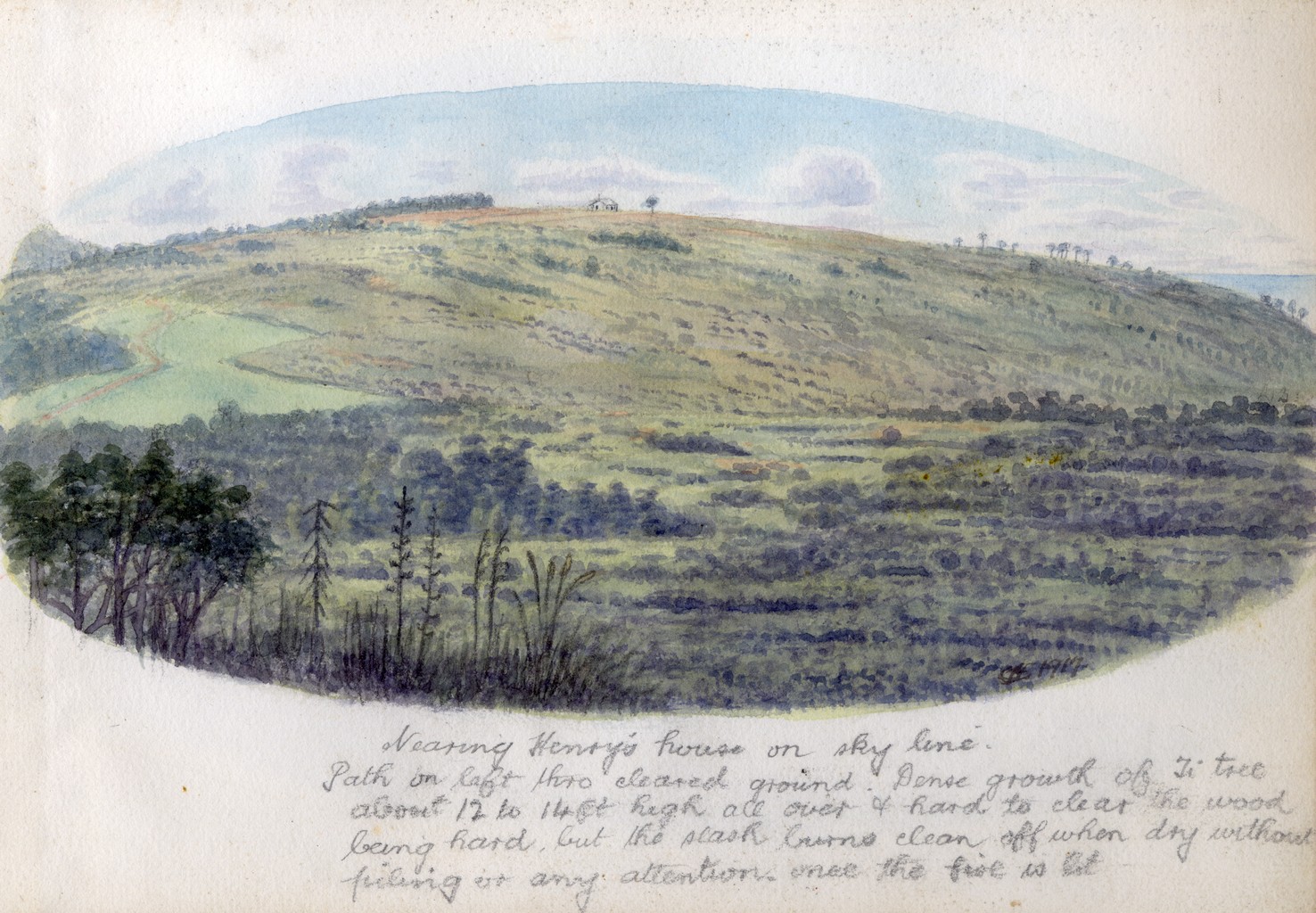
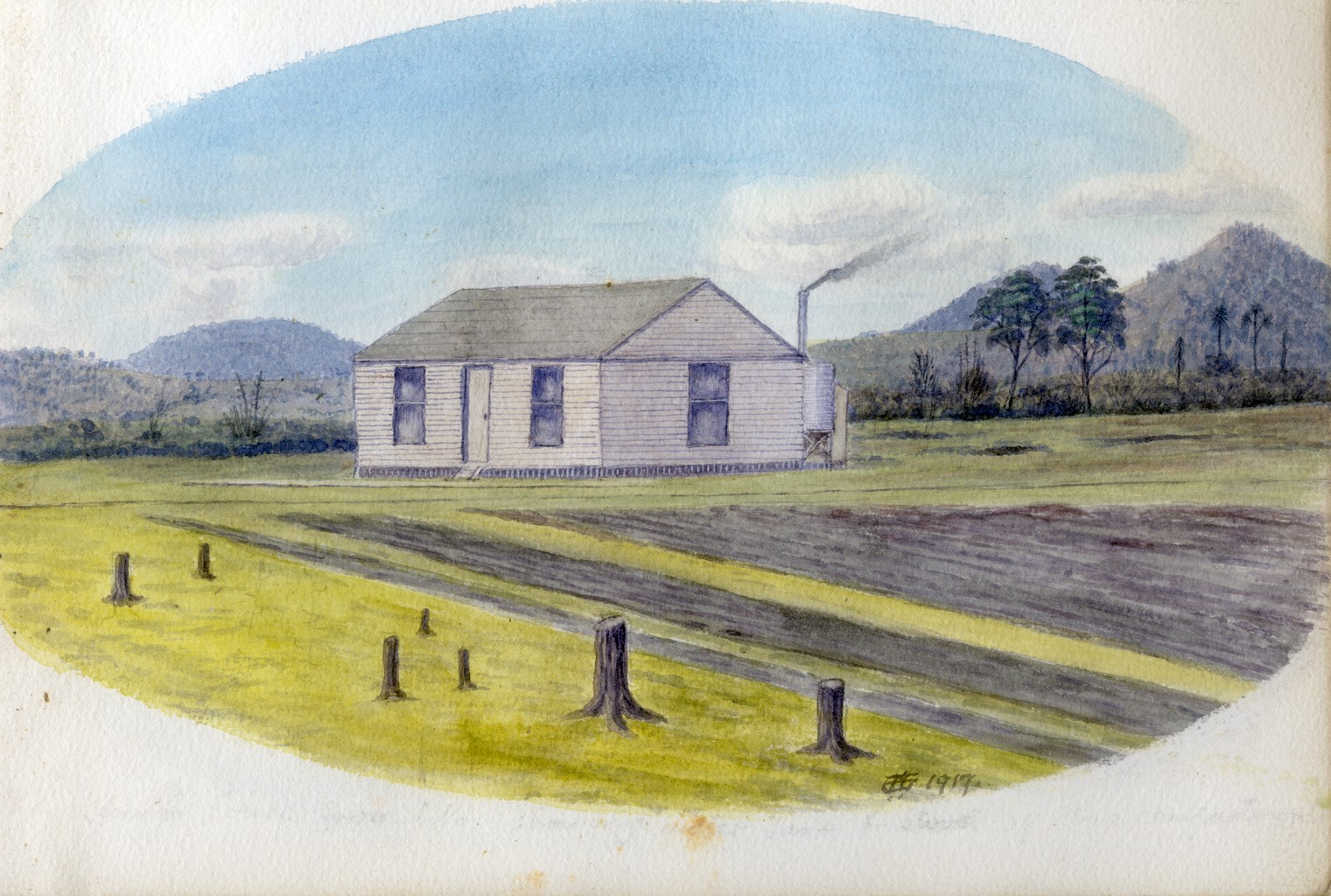
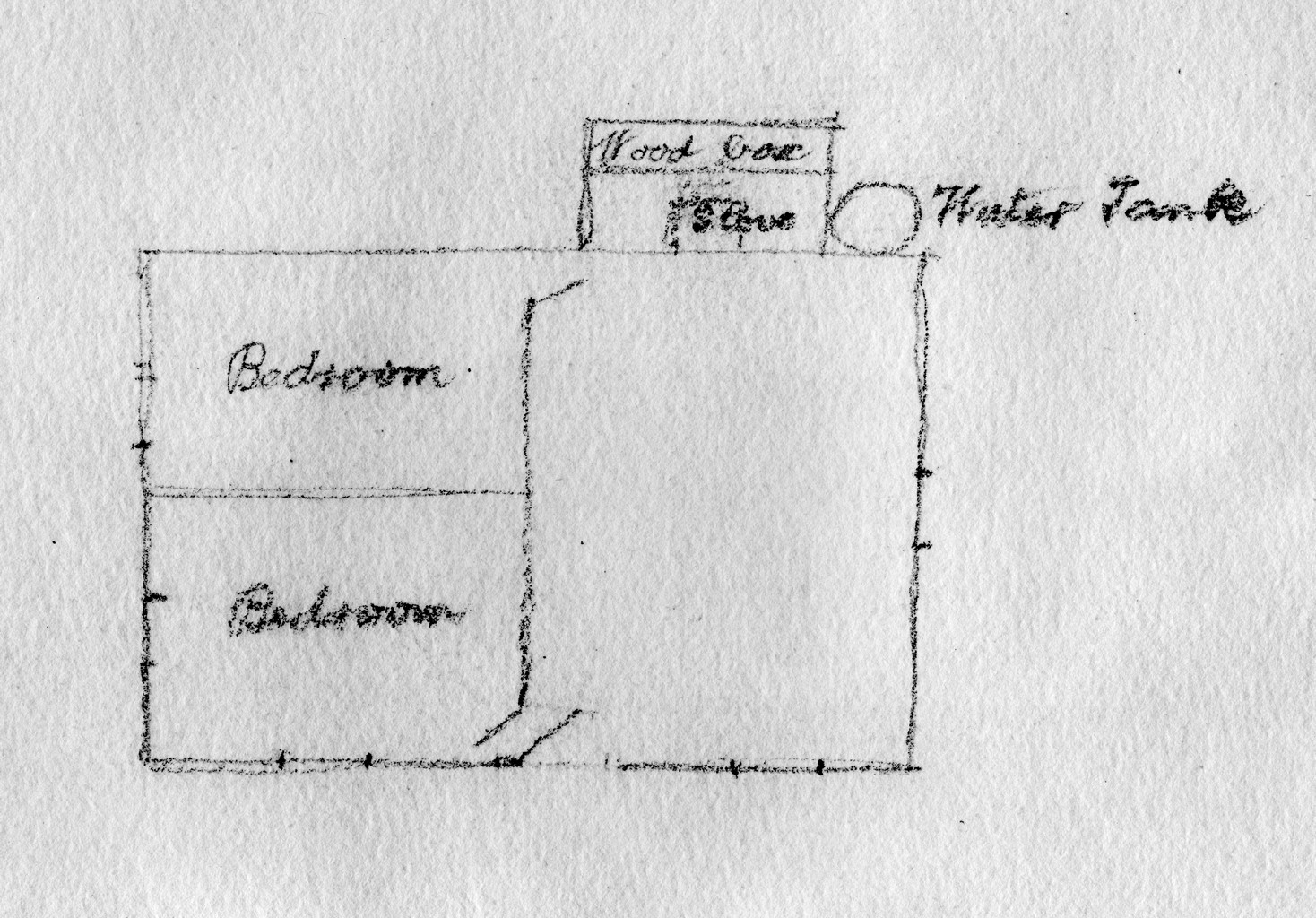
H. G. Leask’s house, Pakanae.
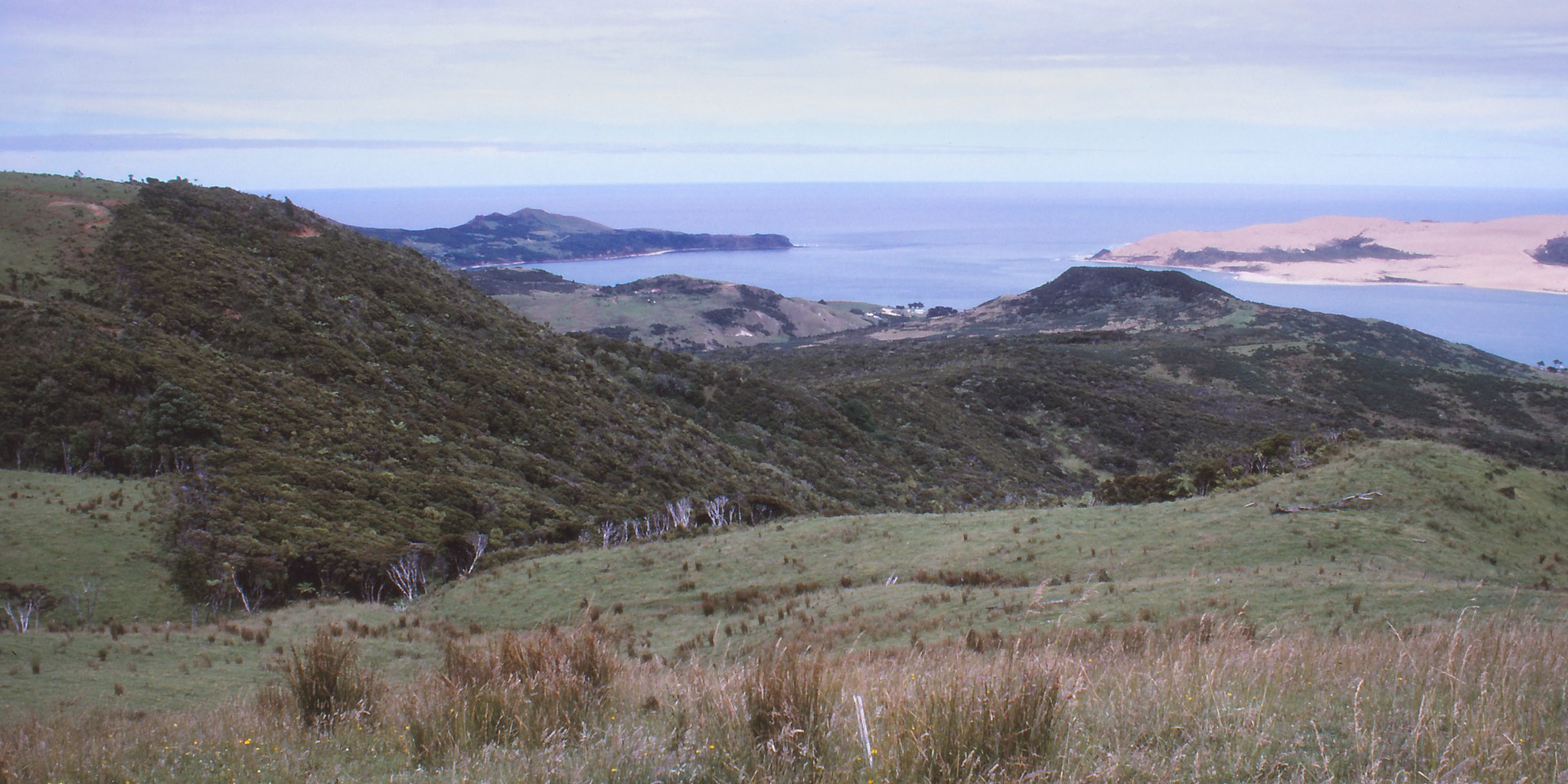
“South Head and Signal Station, Hokianga. Henry’s house is on top of the second furthest hill, right above the steamer passing the South Head”.
“Pakanae and Hokianga River looking east, showing Maori fort to left of kauri sawmill on Point over top of fort. Cultivated flat in front of public road. This view is from near school house shown before”.
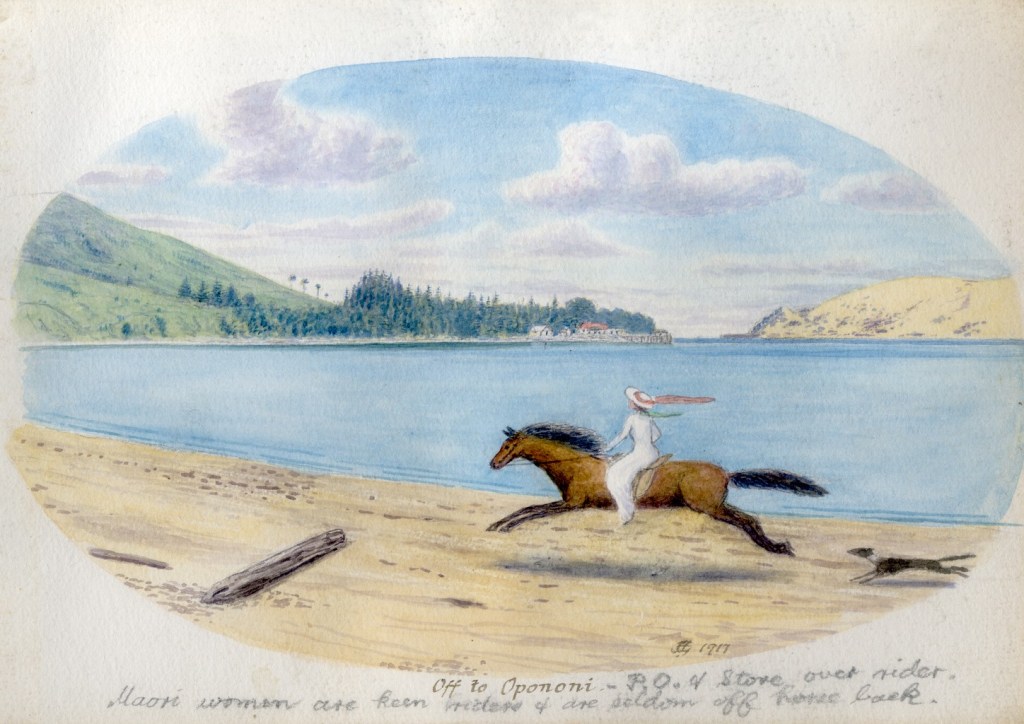
“Off to Opononi. P.O. and store over rider. Maori women are keen riders and are seldom off horse-back”.
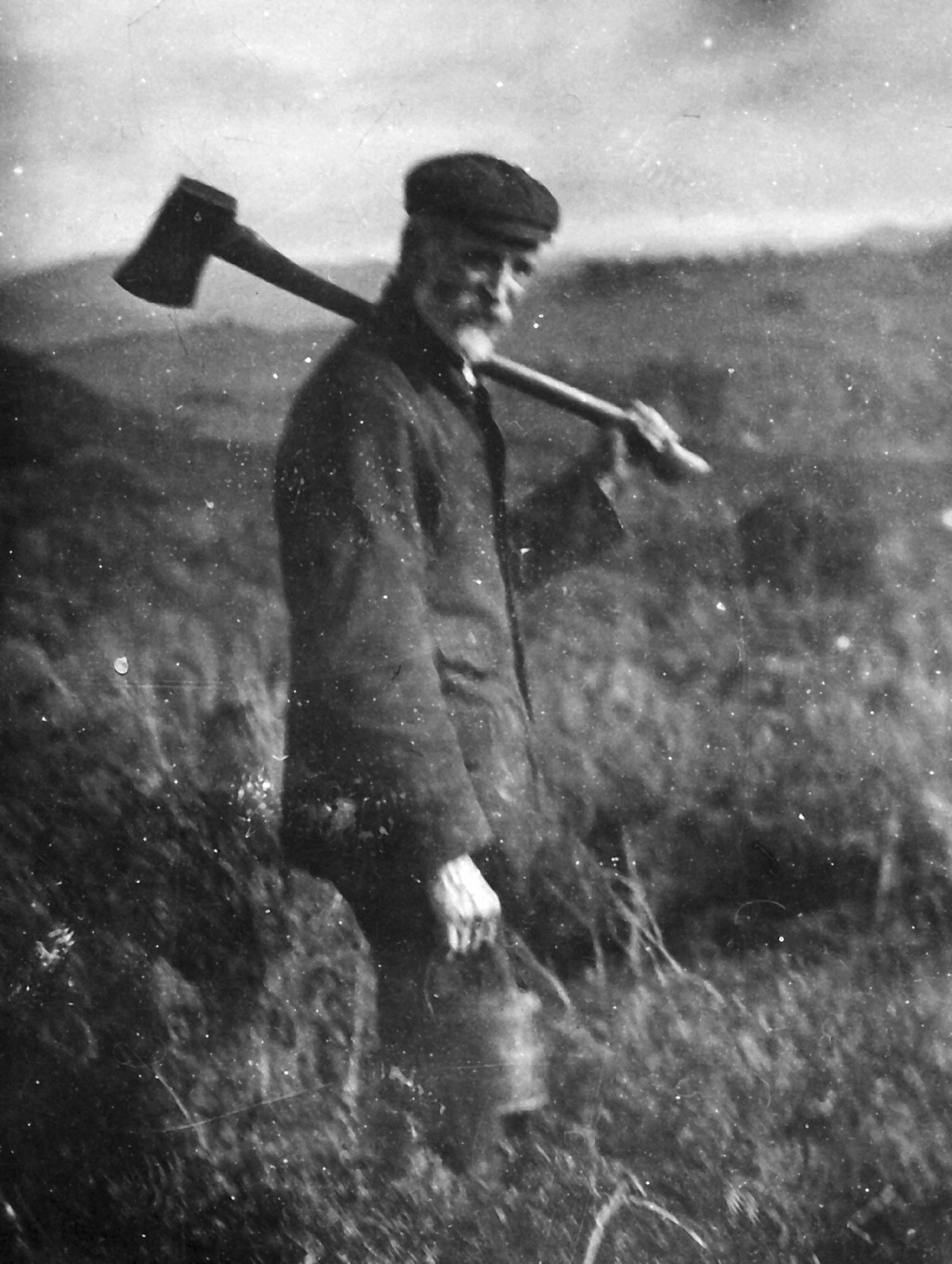
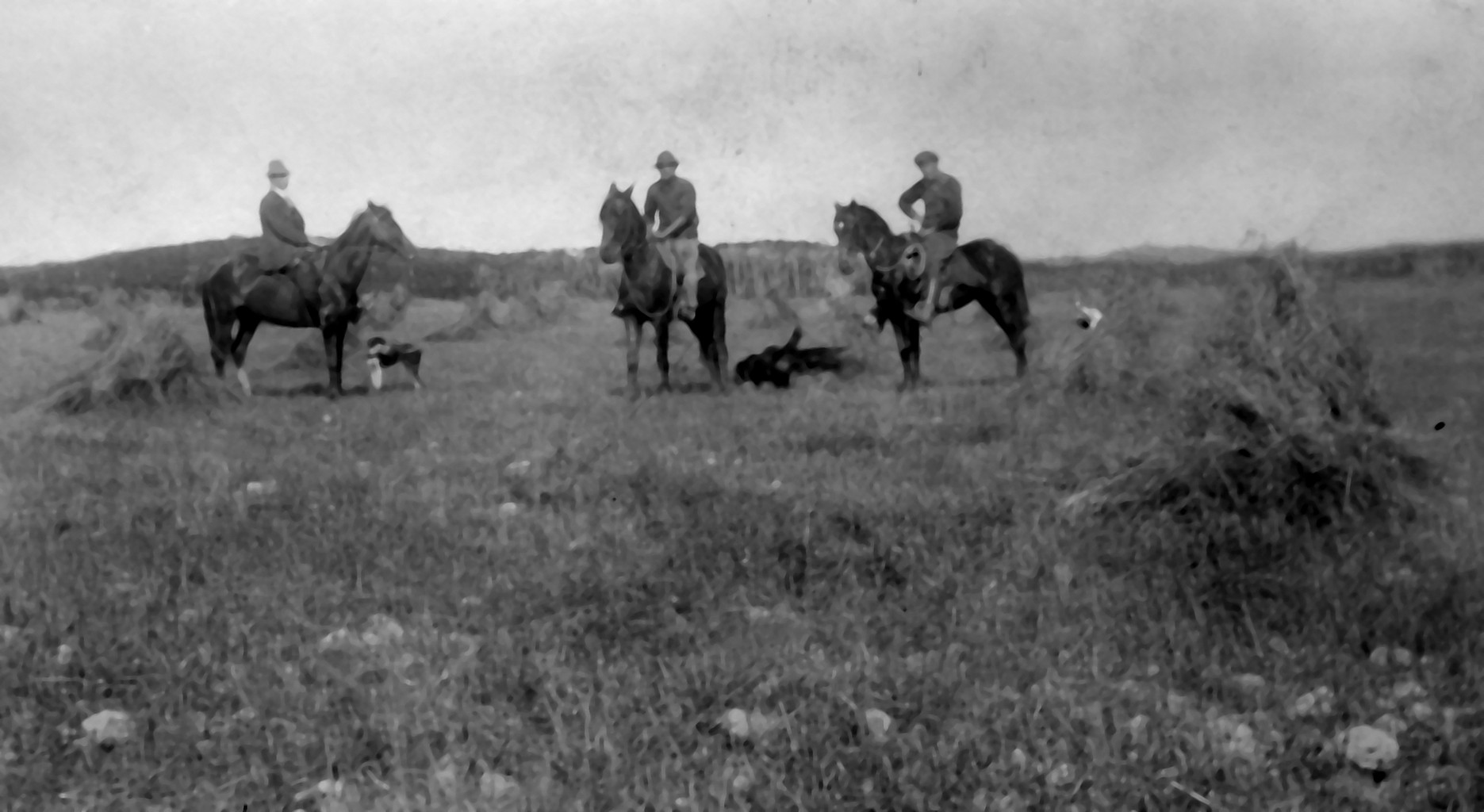
That’s the end of the book. I would guess that they didn’t stay much longer in New Zealand – there would have been a strong demand for land for the soldiers returning from Europe, and the British Columbia painting that I’ve seen is dated 1922. To finish this phase of their story, there are two photographs taken in the Hokianga. Henry Leask is the man with the axe. “The Nisbetts” are on the right.
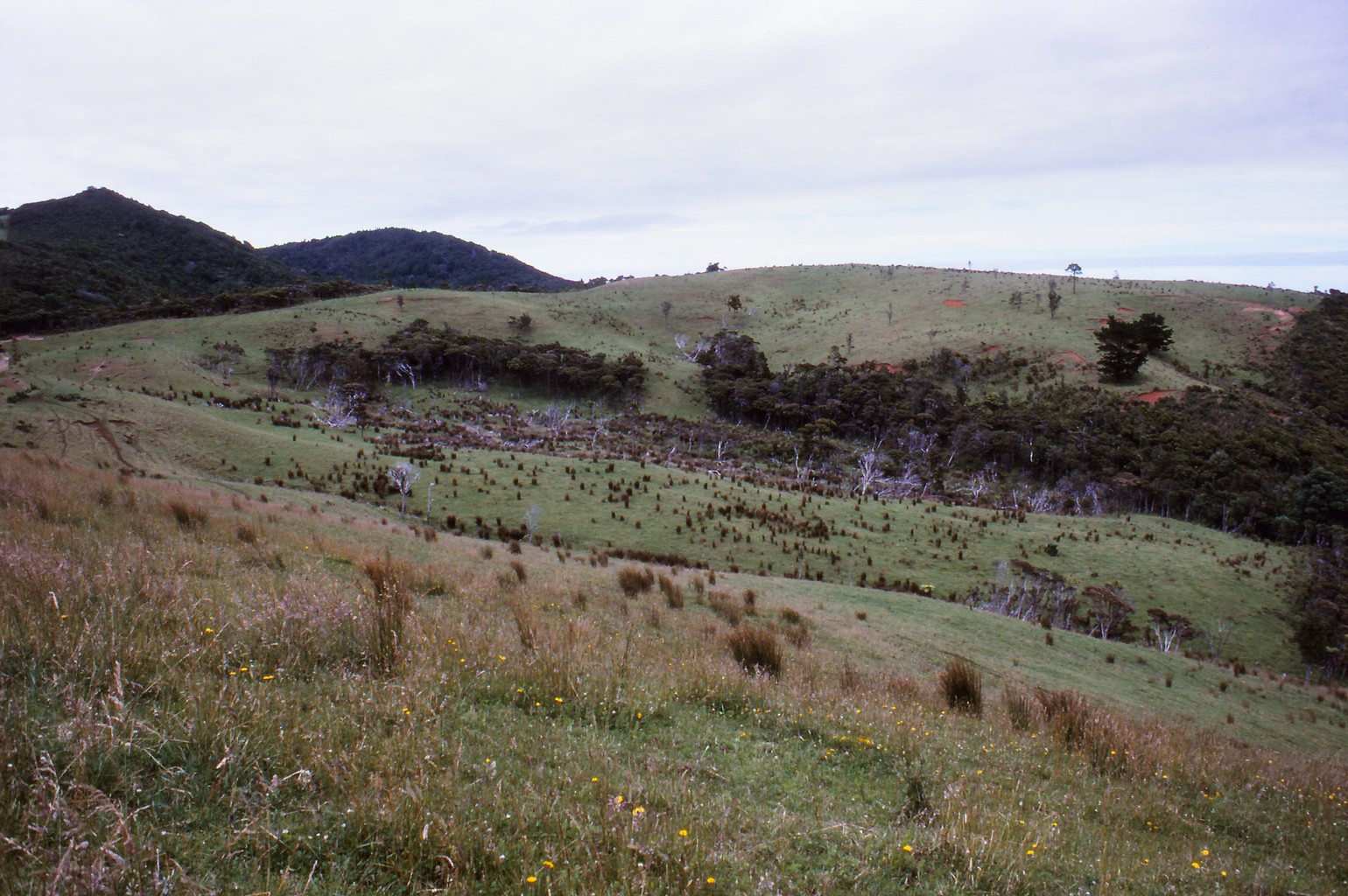
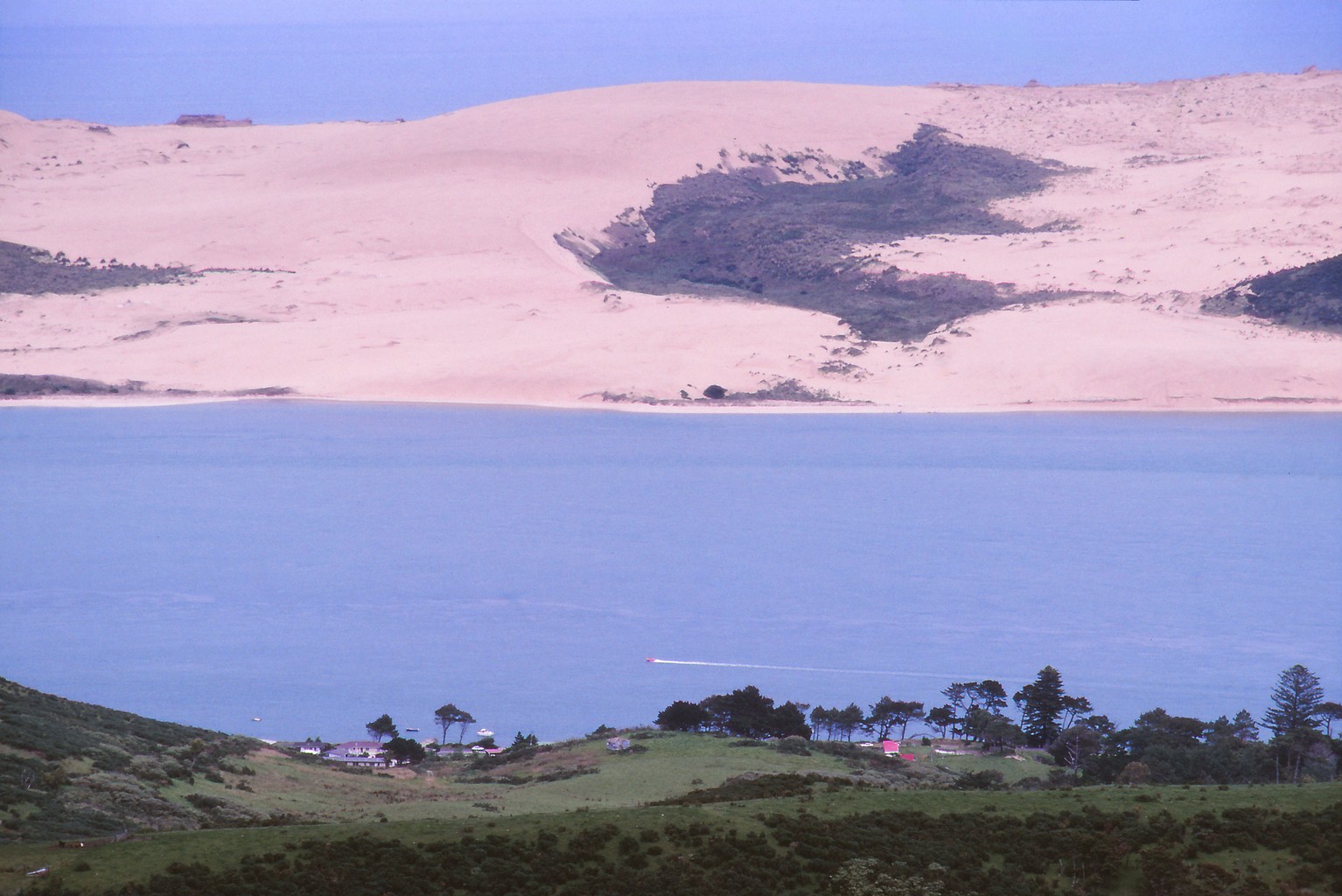
Epilogue: Sue and I visited the area in 1990, armed with photographs of the paintings. The landowner of the No.2 Opononi section said he’d always wondered about that block – he called it the Raspberry Patch because of the small patch of wild raspberries growing there. The images below are from scanned slides which were taken on a rather dreary day, but the features on the paintings are easily recognisable. But, apart from that final painting with the horse rider, why didn’t he paint the sand dunes on the north side of the harbour? – they are some of the most spectacular in the whole country.
 Bill Leask Photography